Staff Helping Our People with Environmental Sustainability (HOPES) is a Climate Action Newsletter series, where I sit down with my West Central Initiative peers to discuss the high-impact climate action work they do across our region. Over a hot cup of coffee, we talk through how their work impacts the health of our pine-and-prairie home.
One of the durable goods that companies with desk-dwelling employees must regularly purchase are computers. Computers, along with other digital devices, such as printers, phones, monitors, and the like, require a complex array of rare earth metals to be built. How these rare earth metals are sourced and shipped — and the manufacturing and assembly labor required —are parts of an immensely complicated and long international supply chain.
Why am I telling you this? Because we need to be more conscientious consumers of durable technologies that require that immense amount of labor hours, often under brutal and exploitative conditions, and the hundreds of thousands of gallons of jet and bunker fuel being burned to ship it to your home or community.
How do we become more conscientious consumers of tech?
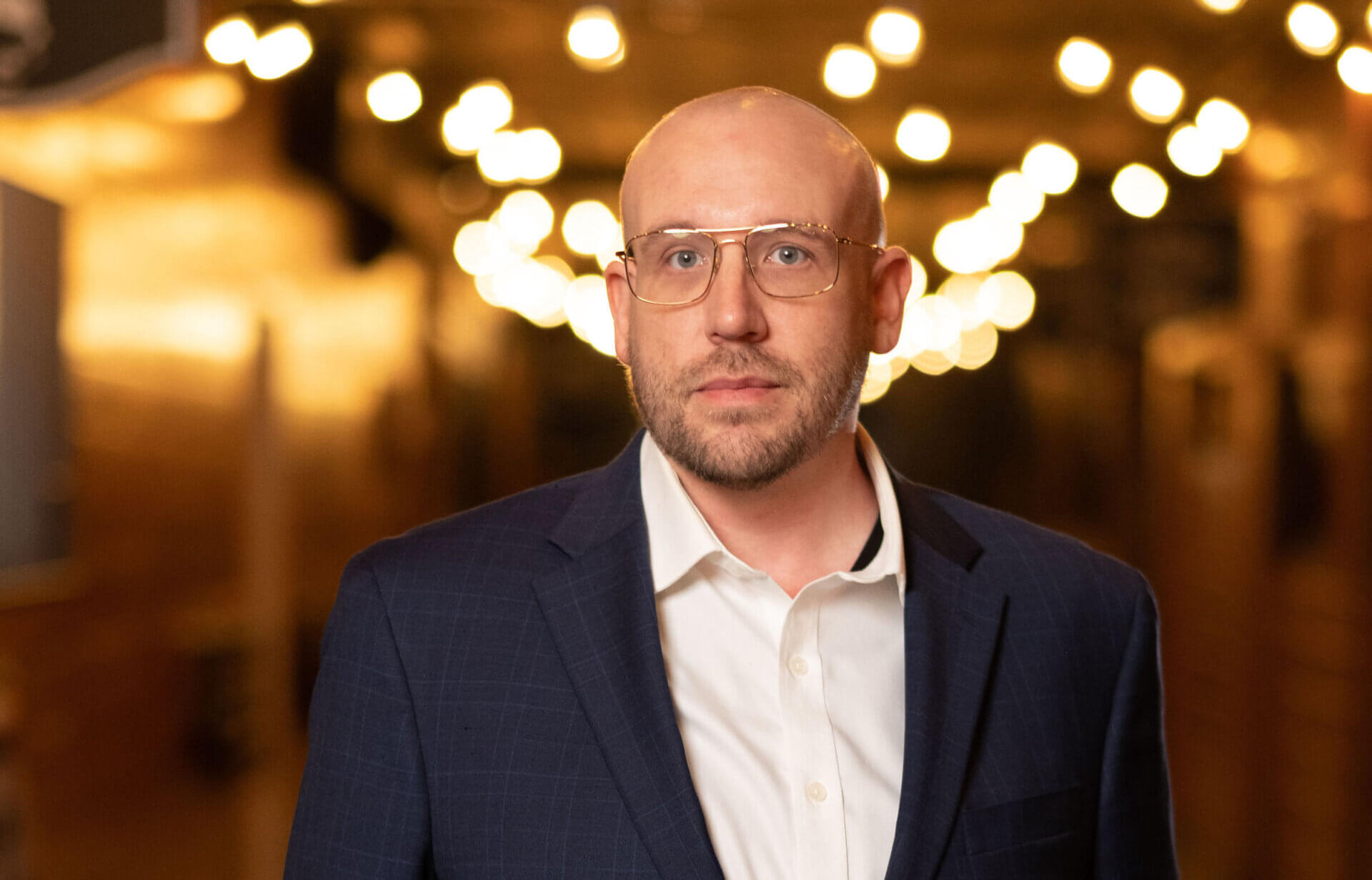
We need a model, and right now, that’s West Central Initiative. To understand how the organization carefully considers its durable technology purchases, I spoke with Scott Herron, our Technology Systems and Data Administrator.
“For many staff members, our work can’t be done without a computer,” Herron said. “So computers become one of the few physical objects we regularly buy and consume. Since I started here at the beginning of 2022, we started working directly with manufacturers to buy our computers.”
Herron explained that by working directly with manufacturers, West Central Initiative can get longer warranties and lifespans out of our staff’s computers. This has two direct, positive impacts. First, the organization is reducing its technology waste by increasing the lifespan of its computers. Second, staff have an easier time fixing their machine if something happens.
“This is kind of a newer development in technology purchasing,” Herron explained, “having a five-year lifespan for a device. In the past 10, 20 years, you’d look at a two-year lifespan as long. Technology was just evolving very quickly, and their lifespans have been increasing. Lifespans have plateaued quite a bit, where now we’re not looking at power as much as the efficiency of the power-source unit.”
Beyond physical devices, cloud storage is the new norm of data storage. Now entities that require substantial computer and data infrastructure increasingly store their data in more centralized and specialized data servers, when 20 years ago, Herron said, “You would get a server environment in your office. So, every office had a bunch of fairly big expensive computers that were holding all of the file storage and serving up applications.”
These large, centralized “cloud” data servers consume an enormous amount of energy, not only to keep the machines running, but also from AC to keep the building cool so the computers don’t overheat. As you might have guessed, if the energy isn’t sourced in a renewable way, literally meaning a system that can renew itself in perpetuity, then we have a substantial environmental problem because of these data servers.
I asked Herron if moving to a more centralized system of data storage was a net good or bad for society and the environment. He said, “We’re just moving the chairs around on the Titanic. We have fewer chairs with centralized data storage, but there are a number of market forces that behoove the people who own those chairs at the data center to act as good stewards of their environment.”
People’s consumption habits create the market forces Herron mentioned. So, if we’re more conscientious consumers of cloud storage, probing the companies behind them to act as responsible stewards, then we can have a positive impact on the health of where we live.
About the Author

Benjamin Velani is the Lead for America Climate Fellow and serving AmeriCorps member at West Central Initiative. He recently graduated Summa Cum Laude from Cornell University, majoring in Religious Studies and Government and writing an undergraduate thesis on the human and ecological effects of light pollution and dark night skies. He was formerly the Dining Editor at The Cornell Daily Sun, and he’s now taking the lead on West Central Initiative’s Climate Action Newsletter.