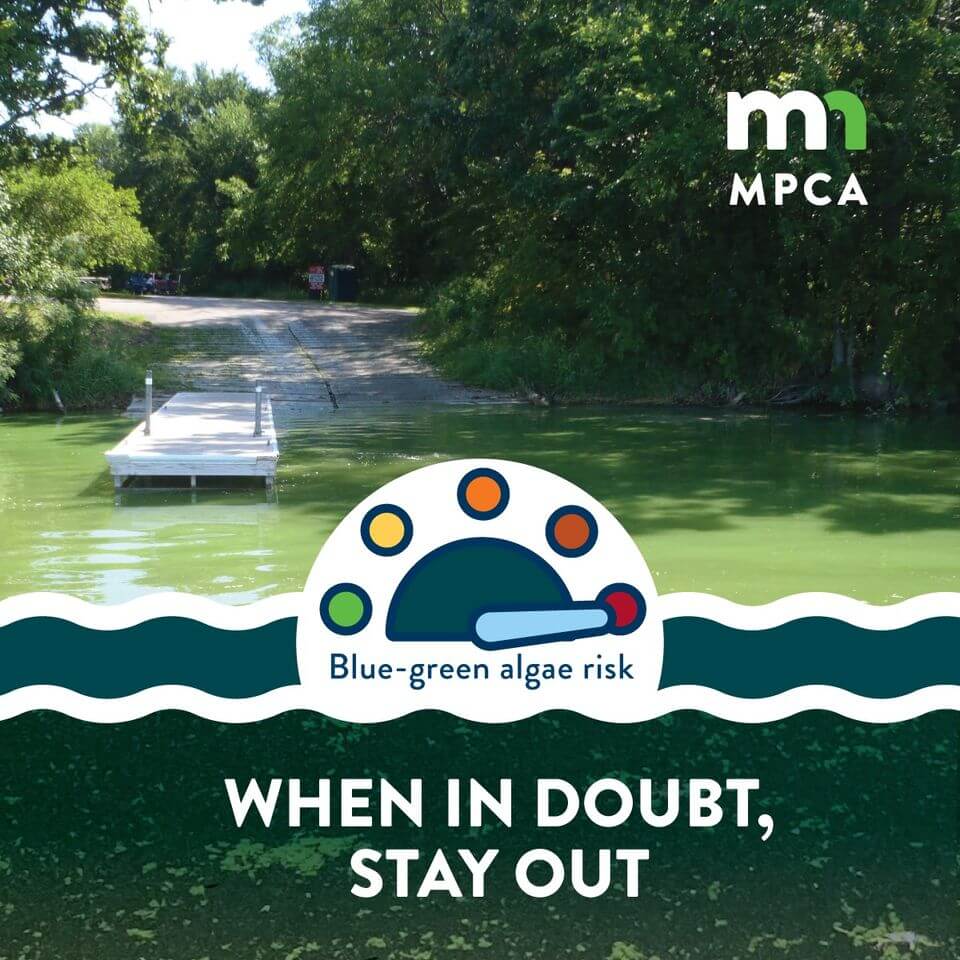
You may have seen a photo of neon green and turquois blue water in a context other than the Chicago St. Patty’s Day parades of past. Harmful algae blooms can create a similar visual effect on lakes in west central Minnesota. Scott Schroeder is the watershed project manager for the Otter Tail River, Buffalo River, and Upper Red River watersheds for the Minnesota Pollution Control Agency’s Northwest Watershed Unit. Based out of Detroit Lakes, Schroeder stays informed on and has been involved in some recent harmful algae bloom cases in this region.
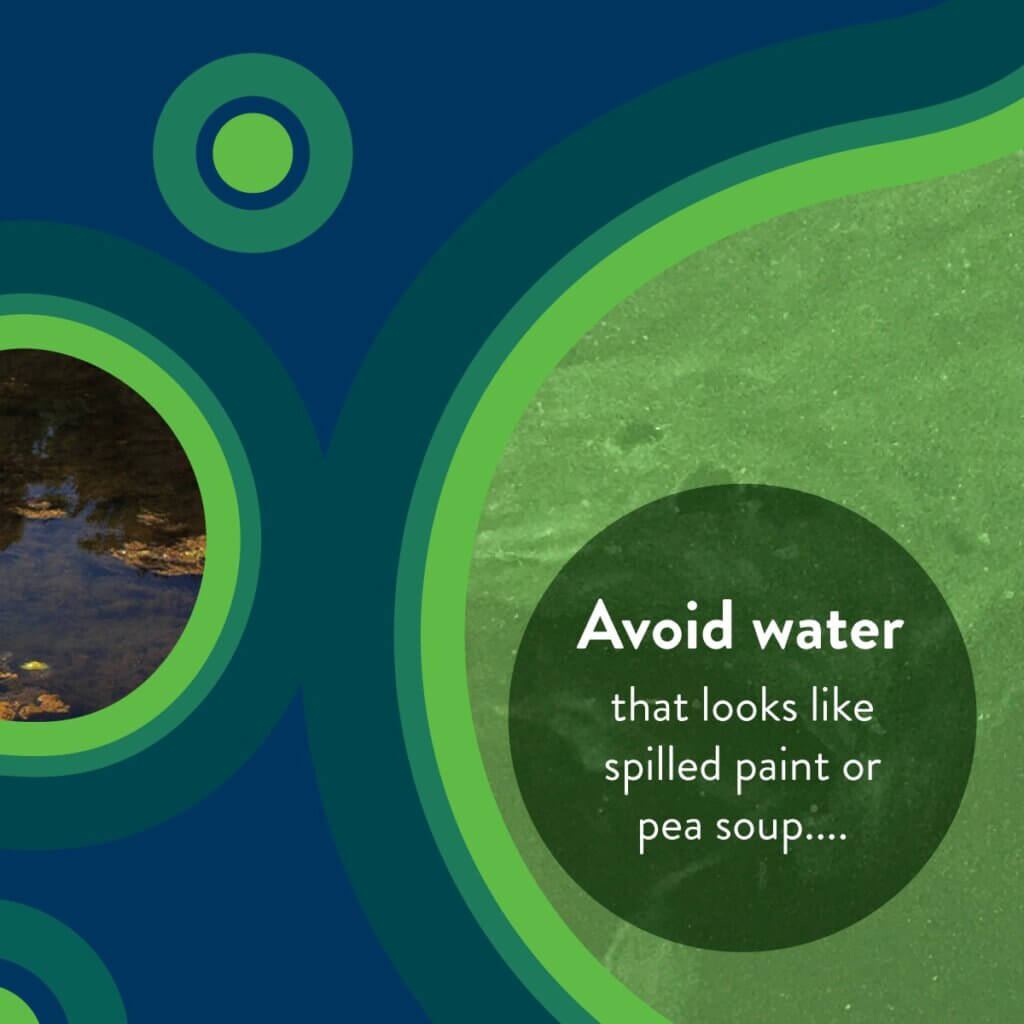
What are harmful algae blooms? “The blue-green algae blooms are actually caused by cyanobacteria,” Schroeder said. “So, it’s not actually an algae though that’s what we call them, it’s a bacteria species that can produce toxins harmful to people and pets as part of their life cycle – especially as they die off, the toxins may be produced at a more intense rate.” While it generally may be safe in other parts of the lake or river, it is not recommended to eat fish caught directly from water with potential harmful algae blooms, at least until after it clears up.
If you or someone you know happens to swim in a body of water with a potential harmful algae bloom, Schroeder recommends “the person and their pets and kids should come out of the lake and immediately bathe, then start watching for any signs of illness. If severe symptoms do occur, immediately seek medical or veterinary attention. Symptoms are listed on the department page, but in general you’re looking for flu-like symptoms, irritated eyes, ears, nose, throat or skin, even visible rashes or blisters.”
“West central Minnesota is definitely susceptible to harmful algae blooms. We are just as susceptible as is the rest of Minnesota to these blooms, whether they are toxic or not. I think it’s important to note that not all algae blooms are toxic,” Schroeder said, adding that what people think might be a toxic or harmful algae bloom might actually be a non-harmful substance like duckweed, pollen, or other natural types of algae common and natural in any and all lakes in Minnesota.
“It can be difficult and even impossible for a person to tell for sure that an algae bloom is toxic just by looking at it,” Schroeder said, “but anything that looks streaky, slimy, or scummy on the surface of the water is definitely a red flag. Blue-green algae blooms are often described as looking like spilled paint or pea soup.” Of the smell, Schroeder said “anything with a foul and swampy order could be a harmful algae bloom, so avoid those types of conditions.”
MPCA’s best recommendation, Schroeder says, is “when in doubt, stay out.”
“Anything that looks abnormal should be avoided and reported to the MPCA or Minnesota Department of Health,” Schroeder said, “you can also call (651-757-2822) or email (algae.mpca@state.mn.us) the MPCA hotline for reporting blooms.”
Summer conditions make harmful toxic algae blooms more likely. “We know that blue-green algae prefer warmer water and air temperatures like when we have dry periods of little to no precipitation. We know they thrive in water that is nutrient rich, which might have a lot of runoff from cities, farm fields, or certain industrial processes.”
If not quickly mitigated to the greatest extent possible, global warming is going to create more suitable conditions for harmful algae blooms to flourish across Minnesota. “I think it’s safe to say,” Schroeder said, “that the frequency and intensity of harmful algae blooms are going to be increased by climate change as we have warmer average temperatures, shorter ice cover in the winter, more intense storm events that wash nutrients and pollutants into the lakes and rivers. I think that’s good evidence that these algae blooms might become more intense.”
As far as a timeline for when more frequent and intense blooms will occur, Schroeder said “I think that we’re already observing these types of conditions. Luckily, we haven’t been having many reported harmful algae blooms this summer, but in the last couple years I’ve heard of several blooms in this area and even farther north, where water and air temps are typically cooler year-round.”
There are several ways regular people across the Midwest can get involved in citizen science efforts to monitor and keep the public aware about harmful algae blooms:
- Download the Cyanobacteria Assessment Network App (CyAN app)
- Get informed or involved in the Cyanobacteria Monitoring Collaborative
- Learn more from the North Central Region Water Network Algal Bloom Action Team
- Sign up with MPCA’s Volunteer Water Monitoring Program
About the Author

Benjamin Velani is the Lead for America Climate Fellow and serving AmeriCorps member at West Central Initiative. He recently graduated Summa Cum Laude from Cornell University, majoring in Religious Studies and Government and writing an undergraduate thesis on the human and ecological effects of light pollution and dark night skies. He was formerly the Dining Editor at The Cornell Daily Sun, and he’s now taking the lead on West Central Initiative’s Climate Action Newsletter.