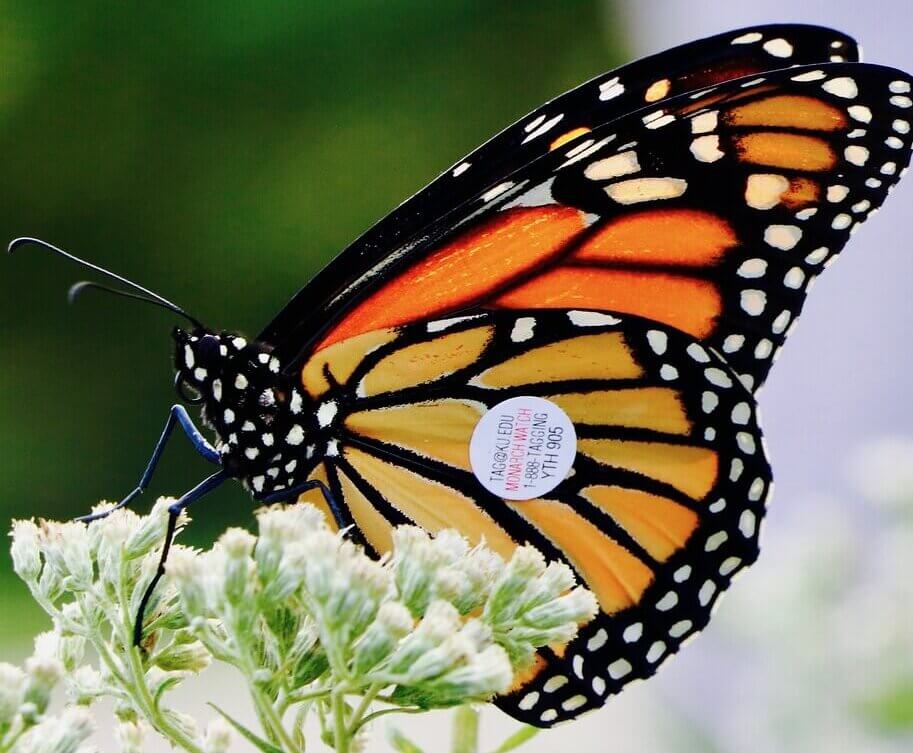
Monarchs are Minnesota’s state insect—a symbol for the state, yet their populations have declined over the past 20 years. We must ensure their continual migration for years to come.
The Disappearing Monarch
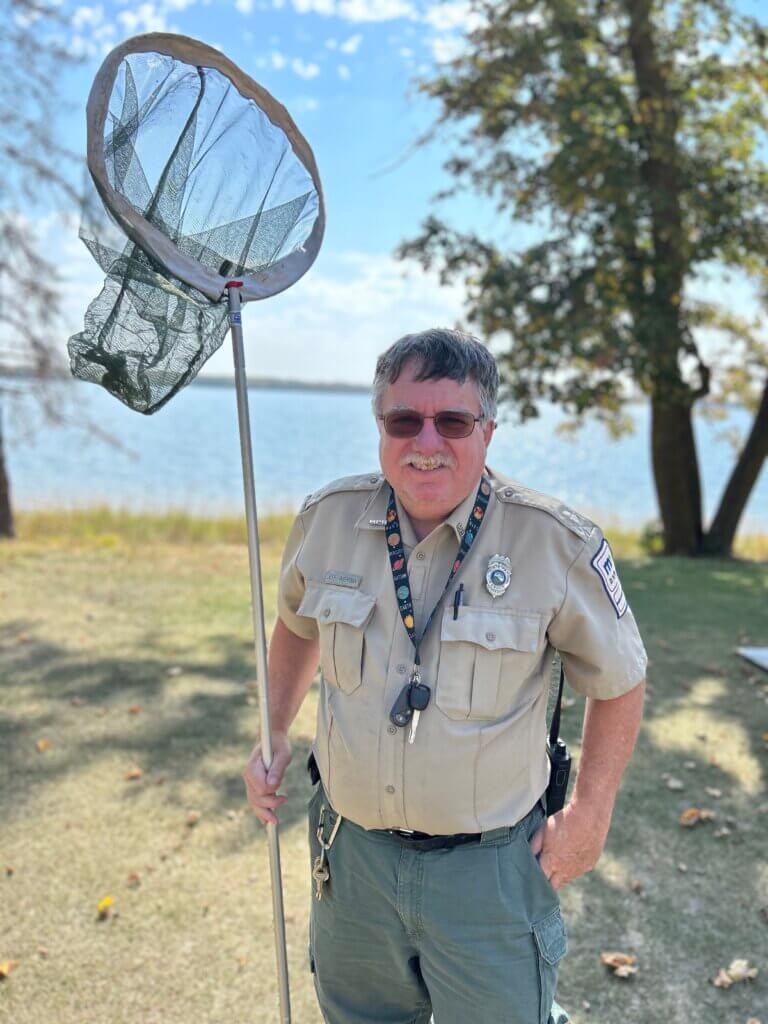
Every year, monarchs flock into the region. Their orange and black wings dot the prairies, searching for milkweed, their main food source. Jeff Wiersma, the DNR Park Manager at Glendalough State Park, has been tagging monarchs since 1998. “We used to have monarchs come through here by the thousands,” Jeff said. “It’s significantly declined since then.”
Fewer and fewer monarchs have been flying around western Minnesota. In fact, in 2013, Jeff stopped tagging monarchs altogether because it was so hard to find them. The U.S. Fish & Wildlife Service says that from 1996 to 2020, the eastern monarch population dropped 88 percent, from an estimated 383 million to just under 45 million.
But maybe you have noticed an increase in oranges across prairies over the past couple of years. Many community members have recently seen an increase in the number of Monarchs. In 2019, Jeff and other staff at Glendalough were able to tag monarchs, albeit at a much smaller volume, as international organizations still list the migrating form of a monarch as endangered, but there’s hope for future generations to enjoy the simple beauty of monarchs.
The Migration
A monarch starts its life as a caterpillar. For around two weeks, the caterpillar feasts on milkweed—the plant on which it’s born and its main source of food. The caterpillar then creates a chrysalis where it undergoes a change into an adult butterfly.
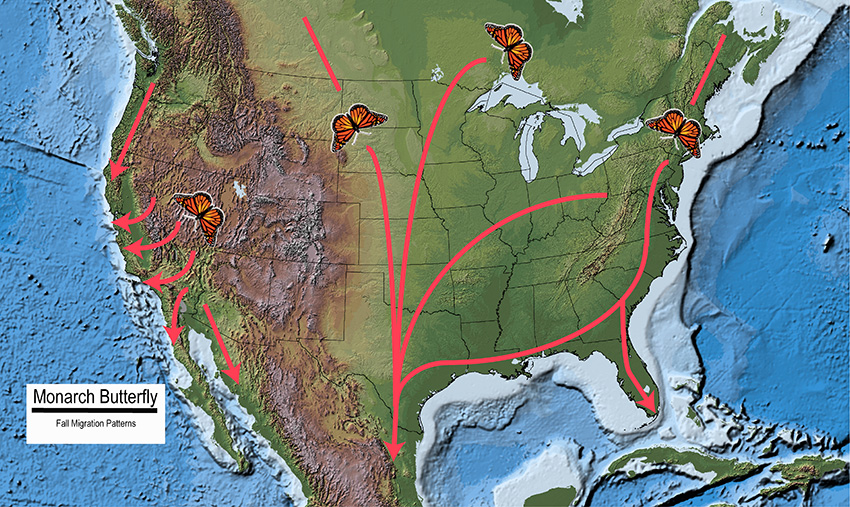
This cycle continues until late summer, when the migrating monarchs follow an internal compass, pointing them in the right direction every fall and spring. They know the correct direction even though they have never made the journey before.
“They seem to know how to get where they need to go,” said Jeff. “One generation will fly 2000 miles. It’s very unique in the insect world.”
The Monarch vs The Changing Climate
Climate change is a major culprit of the population decline. Different types of weather and more severe weather affect the timing of migration. Habitat loss and fragmentation due to development also hinder the usual migratory paths.
Agricultural practices like removing milkweed, the main food source for monarchs, make it difficult for monarchs to survive and lay their eggs. Pesticides kill monarchs, and herbicides kill milkweed and monarch caterpillars.
Jeff says that the best thing you can do to help monarchs is to create monarch-friendly spaces in your community. For example, planting native milkweed in a spot in your yard. Native Milkweed co-evolved with Monarchs—their lifecycles are in sync. Without milkweed, Monarchs cannot survive.
There has also been a movement among community members to plant native grasses (including milkweed) on their property. You can also leave a ditch/roadside un-mowed, allowing for more habitat, connecting prairies across the region, and creating easier migration paths.
Why Tag Monarchs
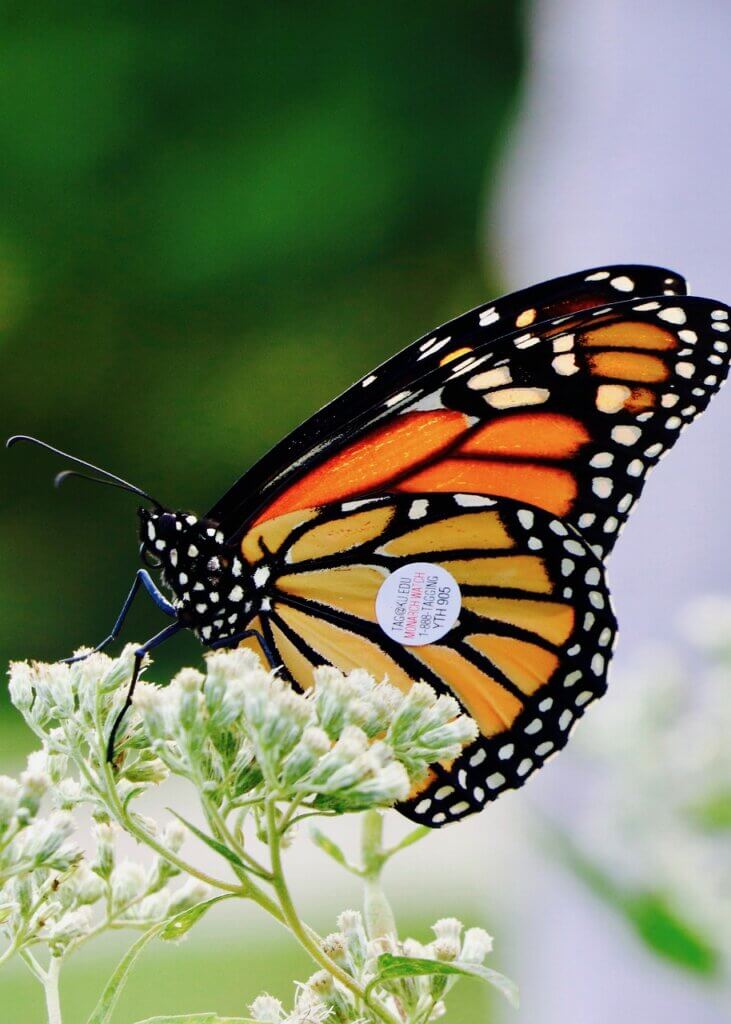
Glendalough State Park tags monarchs in partnership with Monarch Watch, a nonprofit based at the University of Kansas, focusing on monarch education and conservation. Jeff and other staff members started tagging monarchs on August 15. They go out with a net, catch a monarch, and put a smaller sticker on a wing. The tagged monarch is let back into the area to continue its journey.
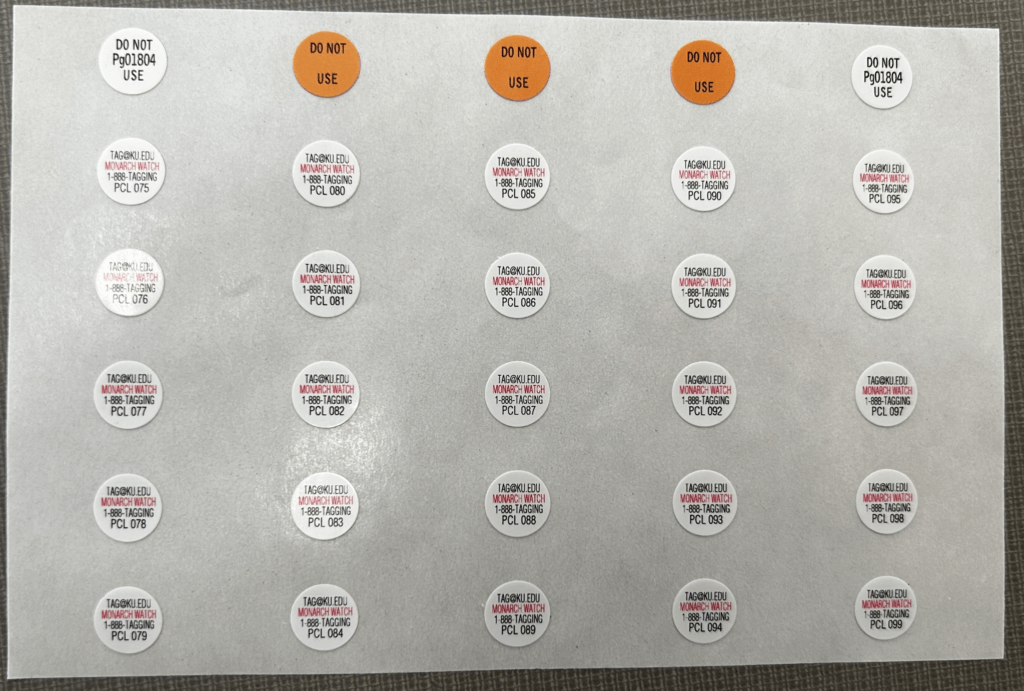
If you get a return on a tag, it unfortunately means the monarch has died, as monarchs have a life span of only a couple of weeks. But if a monarch reaches Mexico, it lays its eggs, giving life to a new generation that can continue head north in the spring.
“You can determine the routes that they’re taking, going down south,” explained Jeff. “You can kind of figure out what kind of habitats and things they’re looking for that because of where they’re being found.”
Knowing the path helps researchers and monarch lovers better prepare ecosystems for the arrival of the butterflies. It also helps scientists better understand how shifting climate and weather affect monarch populations.
Future Journeys
Although we’ve been seeing more monarchs than in previous years, they remain on the endangered species list. A symbol of the Midwest, a migratory monarch signals the end of summer and the beginning of fall. They are not only beautiful, but also ecologically important. Monarchs are pollinators, helping the rest of the ecosystem thrive. We must be mindful of their conservation so future generations can stand in awe of their amazing journey every year.
About the Author

Brogan Ludwig is the ACC AmeriCorps member for West Central Initiative. His year of service includes working on the Climate Action Newsletter and Climate Action outreach. Brogan graduated from Concordia College in May. He lives outside his hometown, Hawley.