A story about why it matters …
The air is cool and dry on your face and fingertips, which rhythmically dip in and out of the sixty-degree water. Water so clean and so cold, you could drink straight from the lake beneath your canoe. As you look up, sun catches waves that turn sky-blue and aqua-marine. You see rocky bluffs and lush, evergreen forest, plump from long summer days.
It’s so quiet all your ear can hear is a faint breeze brushing through trees, and the steady swish, swish of your paddle strokes. Besides your partner, there is nobody else for miles around. You two are utterly alone, off the grid, on just one of a great many inland lakes that compose the Boundary Water Canoe Area Wilderness, BWCAW for short.
I was up there the summer of 2021 with one of my oldest friends, Henry Brooks. A proper thrill seeker and adventurer extraordinaire, Brooks and I were on a seven-day trek across some fifty miles of the BWCAW. Our goal for the trip was to catch most of our meals by spending a considerable portion of the afternoons and evenings fishing. Though we did bring some instant potatoes and rice just in case, we more or less accomplished that goal.
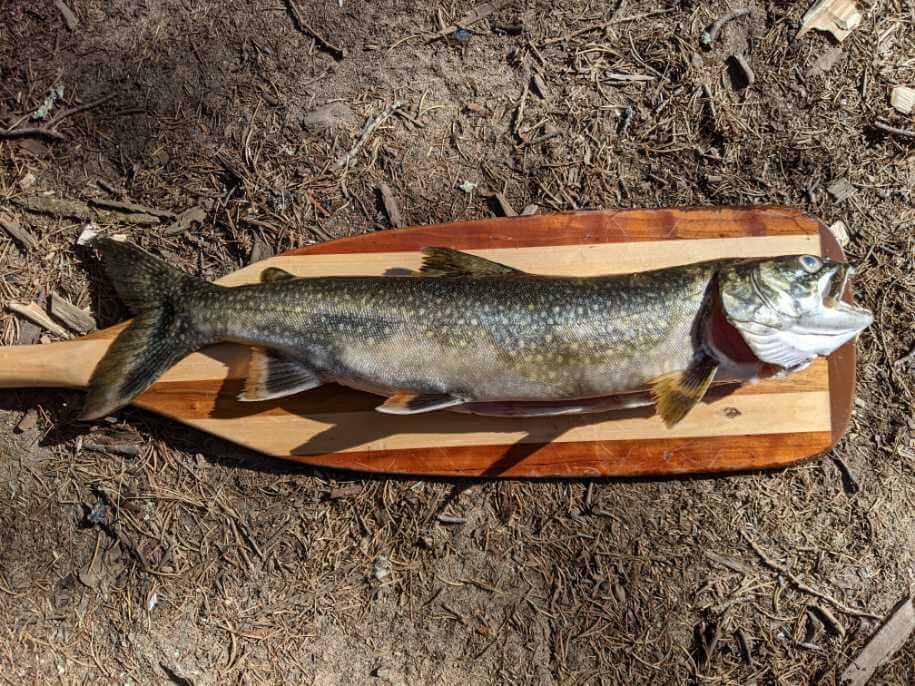
Small mouth bass and northern pike were enjoyed while admiring magnificent vistas of relatively untouched country. Lightly fried in Crisco, just enough to render the little bit of fat in the fish, and seasoned with Lawry’s salt and pepper, this was some of the best fish I had eaten in a while. That said, there was one fish that stood out as having been the most thrilling, yet elusive catch: lake trout. Coming out of deep, cold water from spring-fed lakes, these were strong, fatty fish.
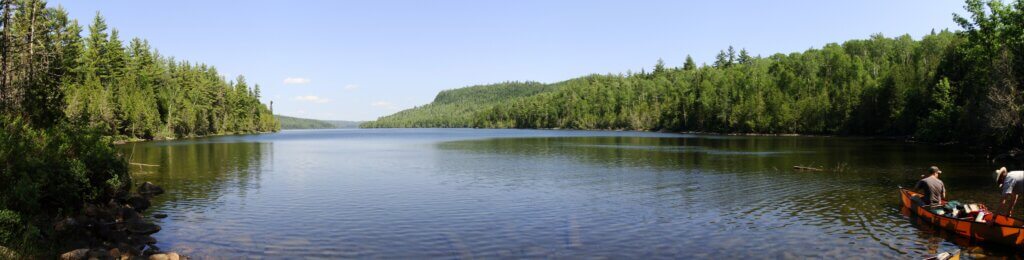
Brooks and I had just finished one of our last portages and put in on Sea Gull Lake. Sea Gull was a massive, almost 4,000-acre lake with winding island mazes, called the Palisades, to navigate. It was also one of the deepest lakes we had been on, a good characteristic to have when after lake trout. We loaded up the canoe, hopped in ourselves, and as soon as we got to water deep enough cast our lines and began trolling. We passed through a choke point, staying 30 yards from shore, and into a channel with an island on the other side. We banked left and continued on through another choke point. Ten yards out. Thirty yards out. Fifty yards out …
“OH! OU! HEY! BEN, I GOT SOMETHING!” Brooks shouted out.
“How does it feel?! Does it feel big?!” I hollered back, struggling to turn and look before I finished reeling in my own line.
“OH yea. This could be that trout we’ve been looking for,” he said.
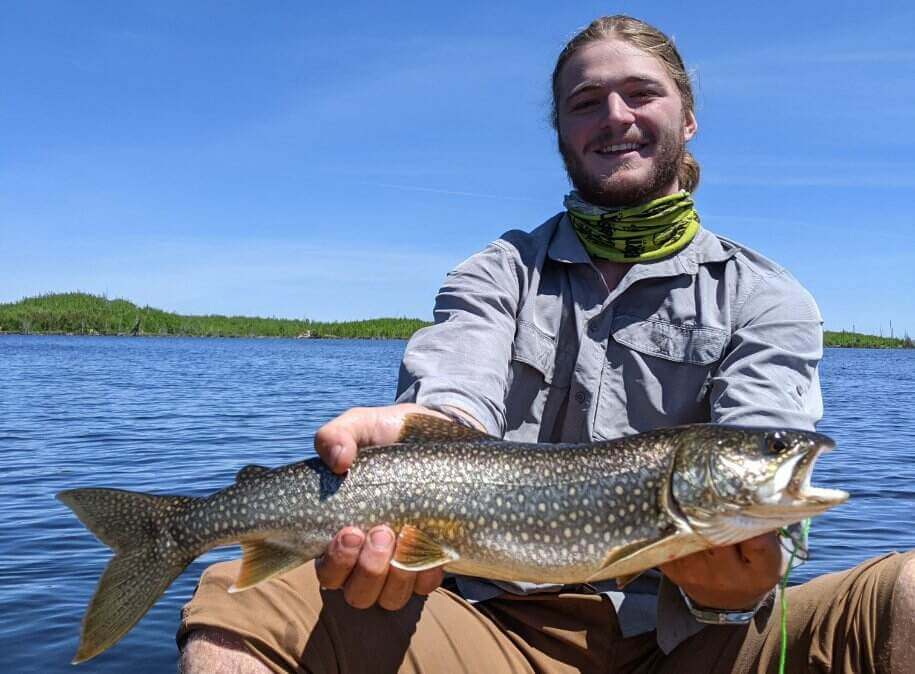
Getting ready to help bring this fish on-board even if it meant going in after it, I turned around and sat up straight. Peering into where Brooks’ line disappeared in the water, I squinted hard trying to see what was at the end of it. A dark streak, then a flash of white belly as the trout rolled, fighting for its life. Then, after some tug-of-war, it was up and squirming in the hands of a man who couldn’t wipe the smile off his face if your rubbed mud in it.
Though I wanted bad to be the first one of us to catch a laker, I was still just glad we had caught one. While he was smiling in front of the camera, I was smiling just as wide behind it. Later that day, skin on, fried up right, this fatty fish melted in our mouths. The best fish I have never caught.
What’s changing …
“Minnesota is getting warmer, especially winter nights in the northern parts of the state. Daily average minimum temperatures during winter (Dec-Feb) have increased 7.3 degrees from 1895-2021 in northern Minnesota [and] 6.0 degrees in central Minnesota…. Minnesota lakes have lost an average of 10 to 14 days of ice cover in the past 50 years, affecting lake and fish health, outdoor recreation opportunities, local governments, and business owners” writes the Minnesota Pollution Control Agency.
Because of these average temperature increases, fish kills have already become more common, with that trend expected to continue as global average temperatures continue to rise. Dan Gunderson for MPR News interviewed University of Minnesota Assistant Professor Nick Phelps, who told him, “‘The conservative estimates from this research suggests that by the end of the century, there will be several thousand fish kills that happen each year.’” That is not a very hopeful outlook for those of us who love fishing.
On top of more frequent fish kills, Our Minnesota Climate, a government online resource, writes, “State agencies report less seasonal ice cover in winter and earlier ice-out dates along with decreases in cold-water fish and increases in species that thrive in warmer water.” Experiences like those I had in the BWCA catching lake trout, one of our state’s most amazing species of cold-water fish, will cease to be possible, leaving future generations hopeless to find that kind of adventure in their home state. Not only that, but ice fishing itself is becoming increasingly threatened as we get fewer and fewer days of safe ice each year.
Another essential cold-water species that is being threatened: walleye. Walters, moon eyes, whatever you like to call the fish who feed thousands of Minnesotans during Lent, walleye are synonymous with Minnesota fishing. In a testimonial, Jon Hansen, a DNR Fisheries Management Consultant, expresses concern at the higher temperatures that research shows “… lead to a loss of natural walleye production ….” Dean Beck, the DNRA Area Fisheries Supervisor from Glenwood, MN, also gives testimony to the difficulties they’ve been having rearing walleye in wetland ponds and how climate change has affected that process.
What can you do …
What we see and experience is varied. The patterns, or apparent lack thereof, we see with our own eye are sometimes hard to reconcile with what we read and learn from the news and each other. It can be easy to wonder, “Is global warming really happening when the DNR continues to put out hopeful and prospective regional fishing outlooks?”
That’s why I find it so helpful to rely on the research and reporting of others, who look at the changes taking place over centuries, to help give me a better sense of the changing climate patterns in west central Minnesota. I’ve shared a number of these sources through the hyperlinks throughout this article, and I encourage you to click on some of them to find out for yourself how I came to my conclusions.
I also encourage you all to take personal action to help ensure the future of fishing in Minnesota is one with taught lines and cold-water species on the ends of them. Here’s a list of some personal actions from my colleague Mark Kaelke, who worked at Trout Unlimited in Alaska for 12 years:
- Reduce or stop fertilizer use to decrease nutrient loading (run-off water from farms can be filled with nutrients, like Nitrogen, which disrupt the balance of an ecosystem) and keep water cold and aerated.
- Support local organizations and participate in programs that protect and restore wetlands, shorelines, and streams (all generally help filter impurities, reduce erosion, and attenuate flows and temperatures).
- Run four-stroke or other advanced technology boat motors to reduce pollution.
- Operate wake boats and personal watercraft well away from shorelines to reduce erosion.
Within the nine counties West Central Initiative supports, Yale Program on Climate Change Communication estimates an average of 66.5 percent of adults agree that global warming is happening. However, and this is the crux of why I do what I do, only an estimated 33.2 percent of adults hear about global warming in the media at least once a week. Adding to this problem is that only 32.3 percent of adults discuss the issue at least occasionally. It seems a silent majority exists.
We need to start reading, thinking, and talking more about the ways our region can step up to the plate and protect our waters and the fish species we rely on for food and fun. Start by getting involved with a local conservation or environmental group because we can do more together than we can alone to save one of humanity’s most ancient traditions – fishing.
About the Author

Benjamin Velani is the Lead for America Climate Fellow and serving AmeriCorps member at West Central Initiative. He recently graduated Summa Cum Laude from Cornell University, majoring in Religious Studies and Government and writing an undergraduate thesis on the human and ecological effects of light pollution and dark night skies. He was formerly the Dining Editor at The Cornell Daily Sun, and he’s now taking the lead on West Central Initiative’s Climate Action Newsletter.
We want to hear from you!
Please take our Climate Action Survey and subscribe to our newsletters.