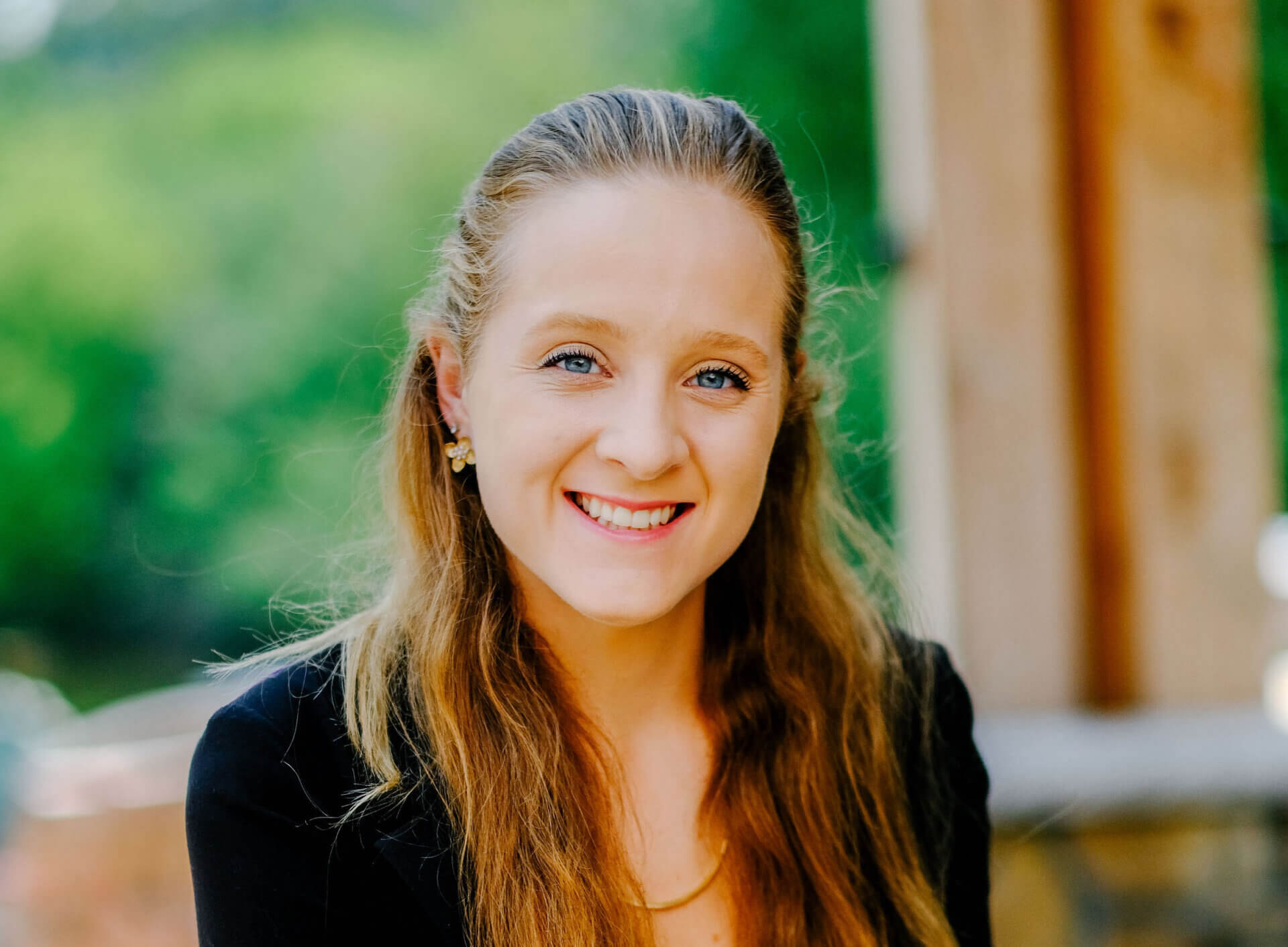
Staff Helping Our People with Environmental Sustainability (HOPES) is a new Climate Action Newsletter series, where I sit down with my West Central Initiative peers to discuss the high-impact climate action work they do across our region. Over a hot cup of coffee, we talk through how their work impacts the health of our pine-and-prairie home.
Q: How did you come to work at West Central Initiative?
A: Studying urban planning in relation to rain gardens, I became interested in the planning field. That led me to find West Central Initiative’s transportation planning position through GreenCorps. As a senior at Saint Benedict, I had written a thesis on the potential climate mitigation impacts of rain gardens in west central Minnesota.
In the fall of 2020, West Central Initiative hosted Mallory as a Minnesota GreenCorps member, and Wayne Hurley, Director of Transportation Planning, was her mentor. She assisted in the creation of Safe Routes to School plans, primarily working with the City of Morris and West Central Area School District.
Jarvi’s service year with GreenCorps was due to end in 2021, but we decided to hire Mallory full-time to continue her stellar work!
Q: How did you grow as a GreenCorps member?
A: It was supposed to be a year of service. But it was also a year of professional development, a year of training me on how to be a climate-conscious planner.
Mallory’s GreenCorps focus was air pollution reduction—planning infrastructure around schools and within communities that emphasize and make more accessible alternatives to fossil-fuel-consuming vehicles.
Q: Why do you care about things like air pollution when transportation planning?
A: I went to the College of Saint Benedict and majored in Environmental Studies with a minor in Biology. The more I learned about the entanglement of social injustices and the effects of global warming, the more I became heartbroken. I decided to find work in fields that address ending those injustices. I can do that now, especially with the Safe Routes to School plans that Wayne and I develop with community partners.
Q: What impact does improving infrastructure for biking and walking have on public health?
A: If we have more bike trails and sidewalks, people can walk to the grocery store, pharmacy, or barber. That will reduce air pollution in our neighborhoods and make it healthier for young kids, elderly people, and anyone with asthma or any lung conditions.
If you don’t have kids, you’d be surprised how many cars are on the road or idling nearby for school drop-off and pick-up. In the winter, it’s worse because the toxic exhaust stays low to the ground.
To reduce the amount of air pollution to which kids are exposed, we think about where sidewalks are placed, where crosswalks go, and how we can make it easier to walk around their community. I’m also looking at how can we get people who live in disadvantaged neighborhoods to their homes safely—in a way that positively impacts their community and the environment.
Q: What have you accomplished since you started at West Central Initiative as a GreenCorps member?
A: I’ve been involved in the development of five Safe Routes to Schools plans and two Scenic Byway plans. Next year, I’ll lead planning efforts at the five public schools in Alexandria, Osakis, and Circle of Life Academy – the most plans West Central Initiative has taken on since it began transportation planning.
About the Author

Benjamin Velani is the Lead for America Climate Fellow and serving AmeriCorps member at West Central Initiative. He recently graduated Summa Cum Laude from Cornell University, majoring in Religious Studies and Government and writing an undergraduate thesis on the human and ecological effects of light pollution and dark night skies. He was formerly the Dining Editor at The Cornell Daily Sun, and he’s now taking the lead on West Central Initiative’s Climate Action Newsletter.