Safe Routes to School is a national movement that encourages kids to walk and bike to school, hoping to foster a lifelong love of being physically active. Minnesota considers this movement so important that the state created its own programming to help fund plans, infrastructure, and school curriculum to encourage walking and biking.
So, what does this mean for communities in west central Minnesota? As a transportation planner, I help communities create plans and provide technical assistance to promote Safe Routes to School at the school districts in our region.
This year I’m working with Pelican Rapids to create a Safe Routes to School planning guide for the community. Our comprehensive planning guides take an entire school year to complete. We collect extensive data to make the best recommendations that guide the school district for years to come.
Most of our data collection involves asking parents, teachers, and other community members for ideas to improve walking and biking in their town. One of my favorite ways to collect data is by holding community engagement events where I ask kids how to make it safer for them to walk, bike, or roll to school.
A few weeks ago, Wayne Hurley and I attended the Pelican Rapids Schools’ parent-teacher conferences. We set up tables at the elementary school and high school with survey boards that asked, “What keeps children from walking or biking to school?” and “What would help children walk or bike to school?” and common answers for each question. Parents and children were invited to put stickers next to their top three concerns or suggestions or write in a concern or suggestion that wasn’t listed. We also had a map of Pelican Rapids where anyone can mark areas of concern for walkers and bikers.
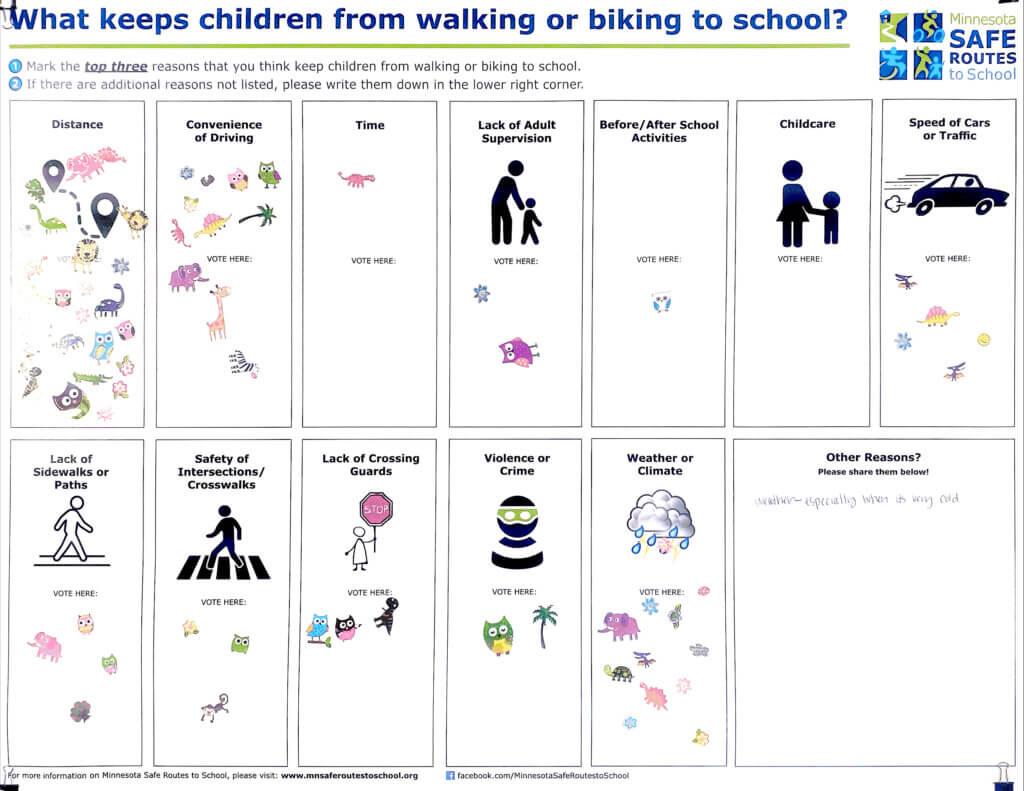
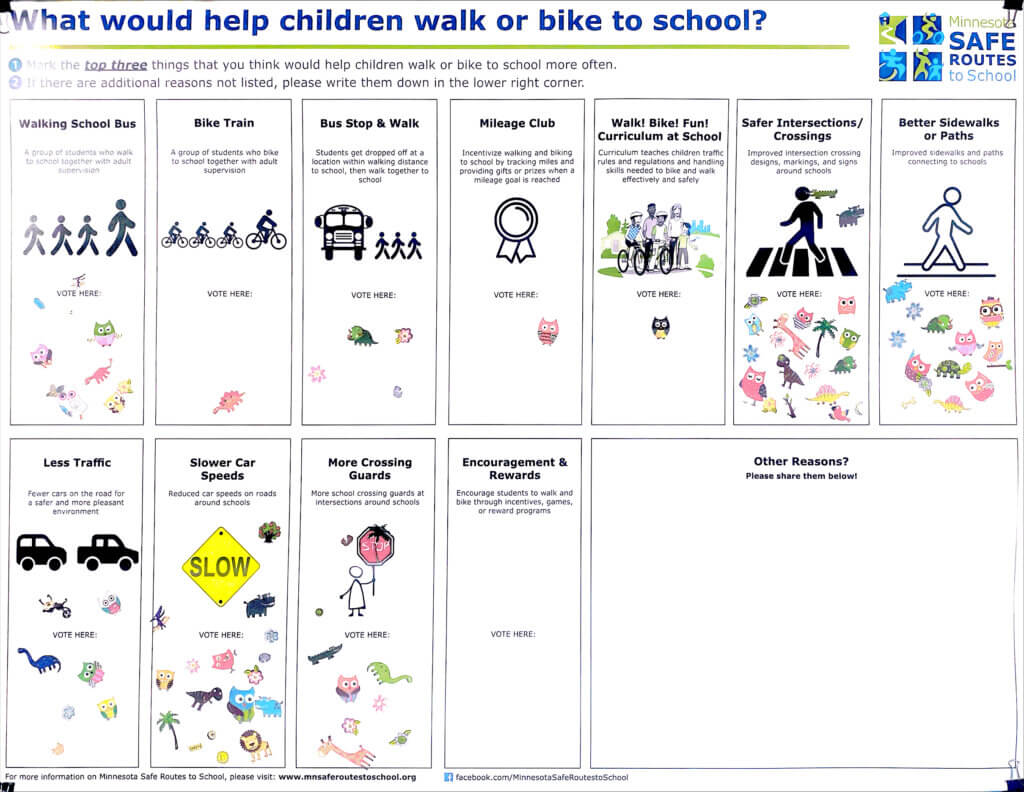
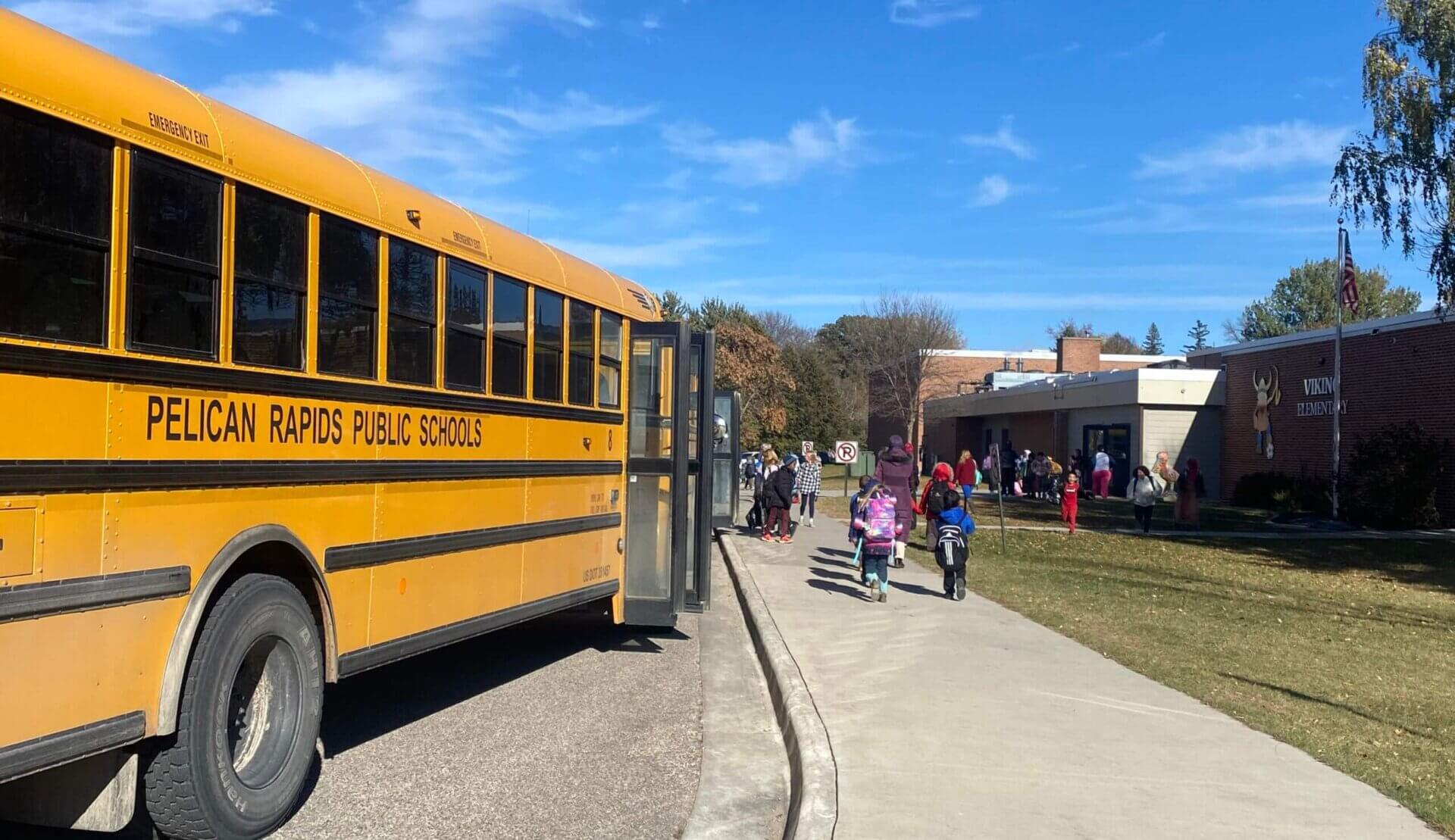
While at Viking Elementary School, I surveyed kids who go to and from school in various ways: kids who live out of town where it’s too far to walk or bike, kids whose parents work at the school and they go to school with them, and kids who walk or bike to school every day! For the survey, I brought a variety of fun stickers—flowers, dinosaurs, and zoo animals—and encouraged kids to place them on my survey board. When kids first approach the survey boards, it can appear daunting to them, and they don’t know where to put their stickers. When this happens, I simply asked them questions that give them confidence and help them to understand the project:
“How do you get to school every day?”
“I take the bus.”
“Do you live in town or out of town?”
“I live in town.”
“Why don’t you walk or bike to school?”
“It’s too cold!”
Then, I show them the category for weather being the reason they don’t walk or bike to school. I ask them what would make it easier to walk or bike in town. The open-ended question causes them to ponder the question for a minute. “More sidewalks” was a common response. Multiple neighborhoods in town have gaps between sidewalks, and kids often end up walking in the street. This is common in quiet neighborhoods. But on busy school mornings, walking to school can be scary.
Helping kids put their experiences into words and vocalize possible solutions helps develop their critical thinking skills. Giving kids a platform to discuss problems in their community and discover solutions is an integral part of the Safe Routes to School planning process. It’s amazing what you can learn when you ask kids for their perspectives and give them space to tell their stories.
About the Author
Mallory Jarvi is West Central Initiative’s Assistant Transportation Planner. As a transportation planner, Mallory helps communities create plans and provides technical assistance to promote Safe Routes to School at the school districts in our region.