We live in an area dense with farms, connected by a web of small rural communities. Farms bring to mind fresh produce, growing your own food, harvest festivals, and independent lifestyles.
Yet, living within a sea of farms doesn’t mean fresh produce is close at hand. Indeed, much of what we consume comes from hundreds (or more) miles away, and it seems rural residents often have fewer fresh foods in their local grocery store – if such a store even exists.
Just before the pandemic hit, a University of Minnesota Extension survey found that nearly half of grocery store owners in towns with 2,500 or fewer residents worried their stores would close within five years. Every year news comes that another small-town grocer is abandoning their shopping carts.
This is just one reason West Central Initiative is helping communities rethink and reimagine their rural grocery stores.
According to the Center for Rural Policy and Development in Mankato, Greater Minnesota lost 14% of its grocery stores between 2000 and 2013.
Why? Small-town grocers have to compete with stores in larger cities, online delivery services, and dollar stores. Chances are these older, legacy stores cost more to maintain with aging equipment that is expensive to fix, too expensive to replace, and lacks energy efficiency, leading to higher electrical costs.
As store owners age, few people want to take over store ownership because of time commitments, the costs, uncertain markets, and other barriers. A 2020 survey of rural Minnesota grocers by the University of Minnesota showed that 80% of store owners have no transition plan for future ownership. Almost half were concerned their store would be out of business by 2025.
The good news is work is being done to address these issues. Innovative ideas and local financing are helping stores in our west central Minnesota region open their doors and expand.
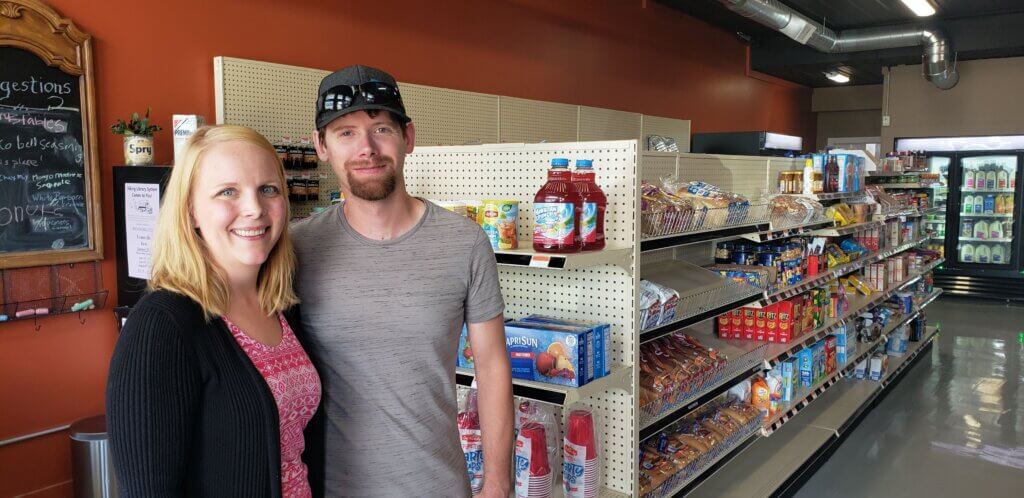
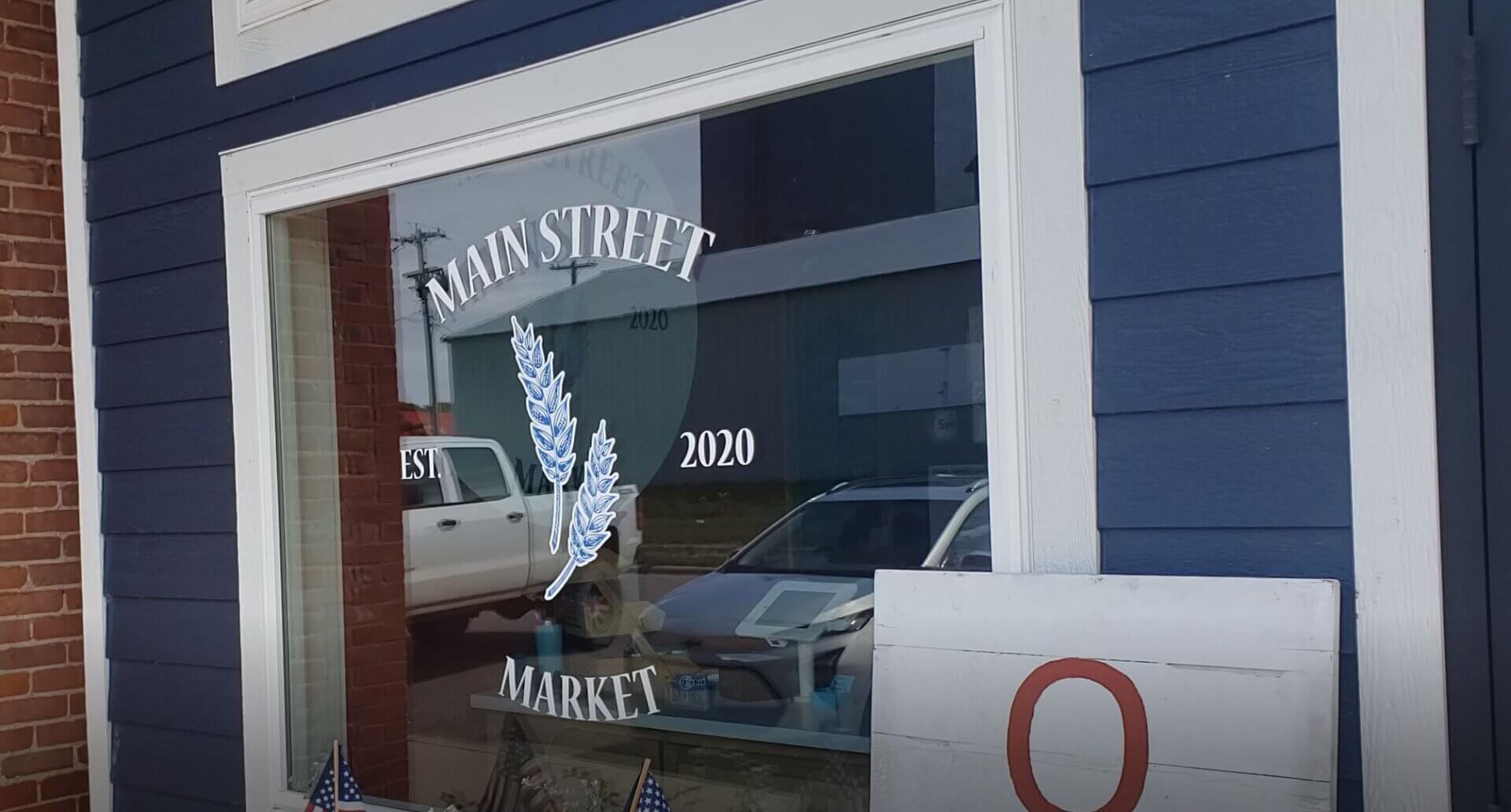
Case in point: Main Street Market in Evansville. Main Street Market opened its doors in the summer of 2021, and by using state-of-the-art technology, it provides 24-hour shopping to its members. Not a member? No problem; they are also open to non-members three days a week, offering full-service grocery selections.
It’s a working concept that Main Street Market owners Alex and Caileen Ostenson are looking to expand. In fact, with the help of West Central Initiative’s loan program and logistical support from the Ostensons, there will soon be a second small-town grocery store location. “We want to be able to dial-in to what’s good for those in the community,” noted Alex.
Grocery Stores Help Create Community

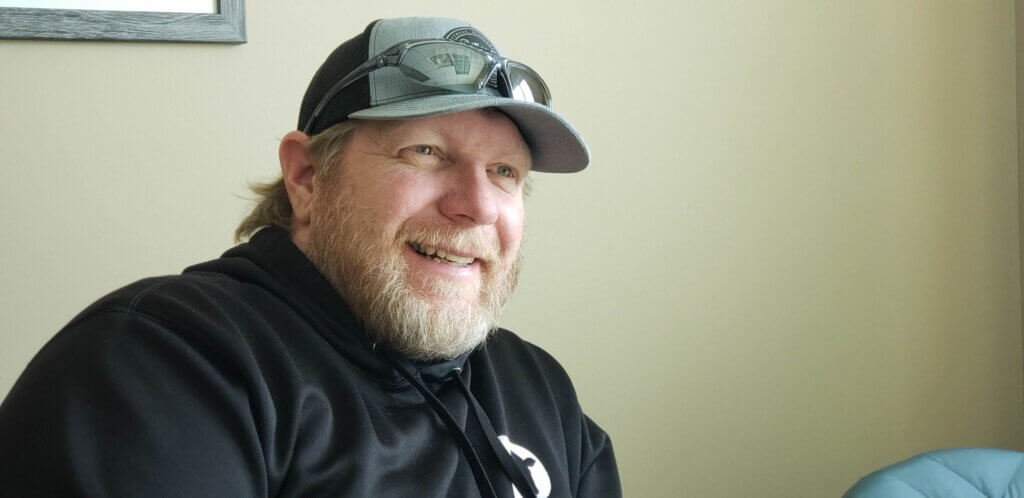
“People don’t realize how much they need the local grocery store until it’s gone,” says Kate Mudge, loan officer for West Central Initiative. “When the old Goodman’s grocery closed in Vergas in 2016, residents had to drive to Frazee or Detroit Lakes for their groceries.” Kate said the community rallied and local business owners purchased the lot and built a multiuse building which will include apartments and a new 3,500-square-foot grocery store owned by local resident DuWayne Ditterich.
Called “Ditterich Mercantile,” the store carries a full line of groceries and specializes in smoked meats sourced from the Ditterich family farm just down the road.
Talk about local foods and local places!
West Central Initiative also stepped in to help regional grocers during the pandemic. The industry was walloped by COVID-19. Supply chain issues, staffing shortages, and inflation made it more difficult to keep shelves stocked and customers’ carts full.
MANNA Food Coop, a community-owned and operated retail grocer in Detroit Lakes, focuses on natural, local, and organic products. MANNA took advantage of a low-interest loan offered through West Central Initiative to help businesses impacted by the pandemic. The loans helped MANNA build up its inventory and offer more competitive pricing to its customers.
Technology and financial support aren’t the only means grocery store owners are using to thrive. For example, Heath Peterson owns both Frazee Family Foods and Osakis Family Foods. He’s often heard Frazee residents grumble about the lack of a laundromat in their town.
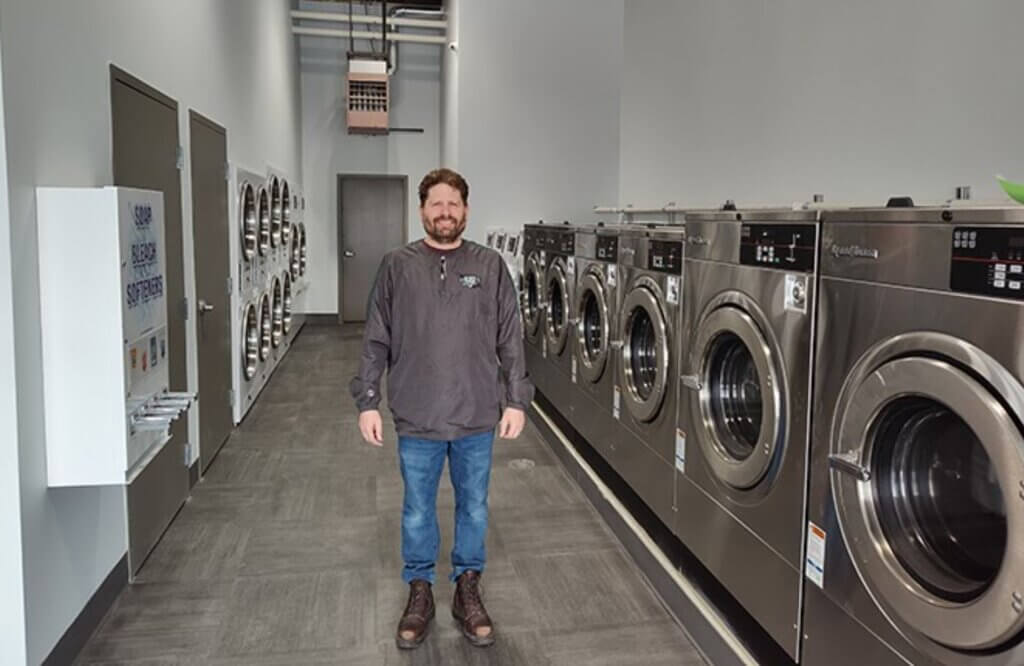
So, Peterson saw an opportunity, reached out to West Central Initiative, and soon the Lucky Bubble laundromat will open in the back of the Frazee grocery store. Residents no longer have to drive ten-plus miles to wash their clothes.
It’s a win-win: customers can grocery shop while they wash their clothes, and Peterson has another source of income to support both projects.
(Editor’s Note: West Central Initiative provides loans for entrepreneurs in our service area and offers several different loan packages. For information or other loan questions, contact Kate Mudge at 218-739-2239 or kate@old.wcif.org.)