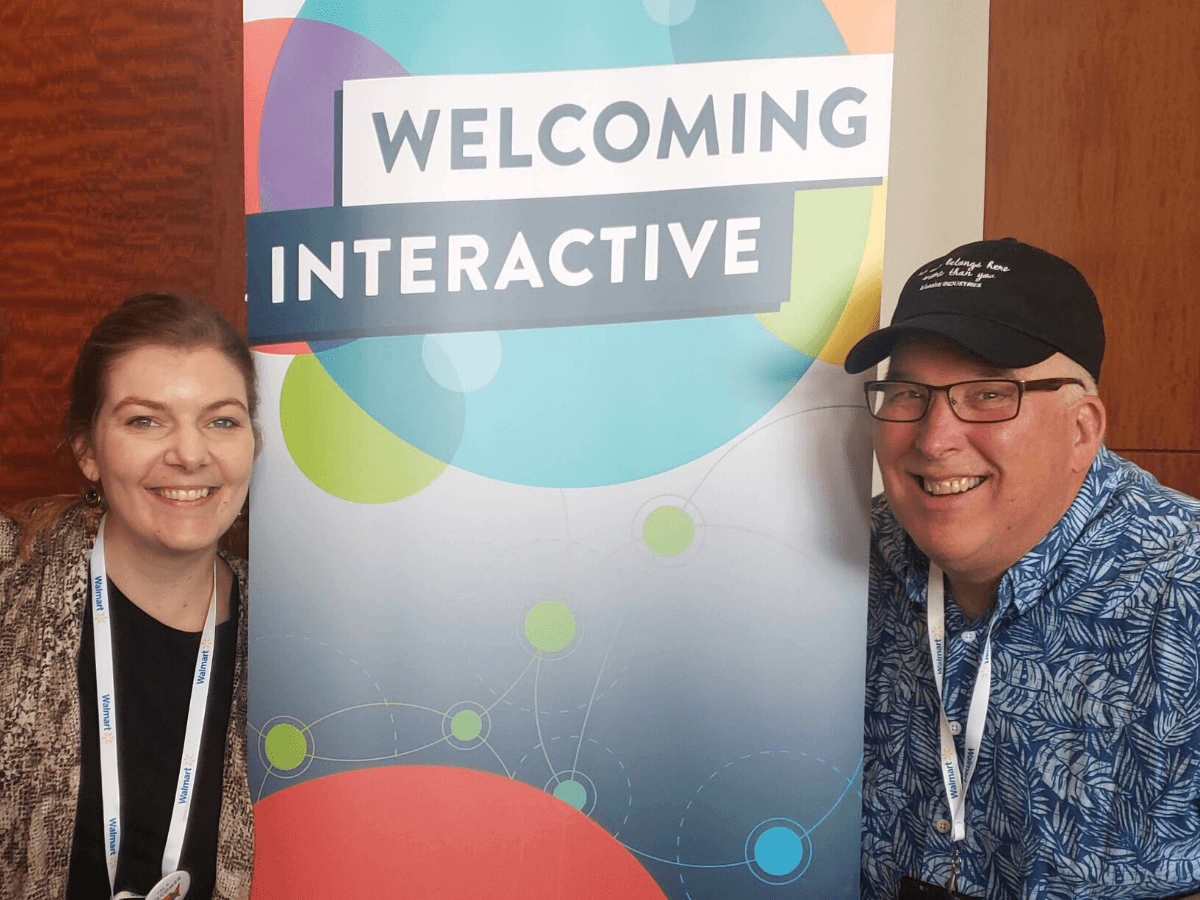
Last week more than 400 professionals gathered at the Welcoming Interactive organized by Welcoming America to discuss best practices for building and sustaining welcoming infrastructures for New Americans. Of the hundreds of participants, two West Central Initiative staff, Assistant Community Planner Celeste Koppe and Community Engagement Specialist Rick Schara, made the trip to North Carolina with the intent of helping cities in our region to become more inclusive and economically viable for all.
The conference took place in Charlotte, a city known for its rapid growth and banking activities. At the conference, city leaders acknowledged that skyscrapers seen downtown were built in the 1990s largely by undocumented immigrants, a community whose situation has been compromised in recent years despite their immense contributions to the city’s development.
While tensions experienced in Charlotte aren’t unique, responses from community leaders are exceptional. Their work to create policies and programs for immigrant inclusion has qualified them to be a Certified Welcoming City, a distinction granted by Welcoming America based on the organization’s Welcoming Standard.
“Much of this year’s Welcoming Interactive centered around how local governments, nonprofits, and community foundations can work together to build a welcoming infrastructure,” said Koppe. “This might look like creating and sustaining county or city level offices for immigrants and refugees, making sure New Americans do not face language barriers when accessing necessary information to get settled, or working with employers to recruit and support employees from different countries.”
West Central Initiative recognizes the importance of refugees and immigrants in our area. Like all of Greater Minnesota, our region faces the challenges of an aging population, with more than half of our counties experiencing more deaths than births in locally born populations between 2010 and 2019. In contrast, we’re seeing growth from immigrant and refugee communities, specifically in areas like Clay and Otter Tail Counties (see table below). According to the Minnesota Chamber Foundation Report, immigrants in Minnesota contributed considerably to the economy through their workforce participation, consumerism, taxes paid, and entrepreneurship.
| County | Population 2019 | Population Change (%) | Natural Population Change | % of in-Migration that is international |
| Becker | 35,183 | 8.2 | Increase | 22 |
| Clay | 65,318 | 10.7 | Increase | 55 |
| Douglas | 39,006 | 8.3 | Increase | 2.4 |
| Grant | 6,074 | 0.9 | Decrease | 100 |
| Otter Tail | 60,081 | 4.8 | Decrease | 25 |
| Pope | 11,308 | 2.8 | Decrease | 10 |
| Stevens | 9,671 | -0.6 | Increase | 100 |
| Traverse | 3,360 | -5.6 | Decrease | 100 |
| Wilkin | 6,506 | -1.1 | Decrease | net out-migration |
Through participation in Welcoming America’s Rural Welcoming Initiative, our staff meet monthly with Welcoming America coaches to set and implement goals for our region, one of which involves coordinating Welcoming Week in our area. “We’re working on assembling a cohort of community leaders interested in hosting a Welcoming Week event in their town or city,” said Schara. “Events can range from cultural performances to shared meals and informational sessions for city services—anything that brings immigrant and non-immigrant folks together to share space and connect.” If your local unit of government or organization would like to be involved, please contact celeste@old.wcif.org or rick.schara@old.wcif.org for more information.