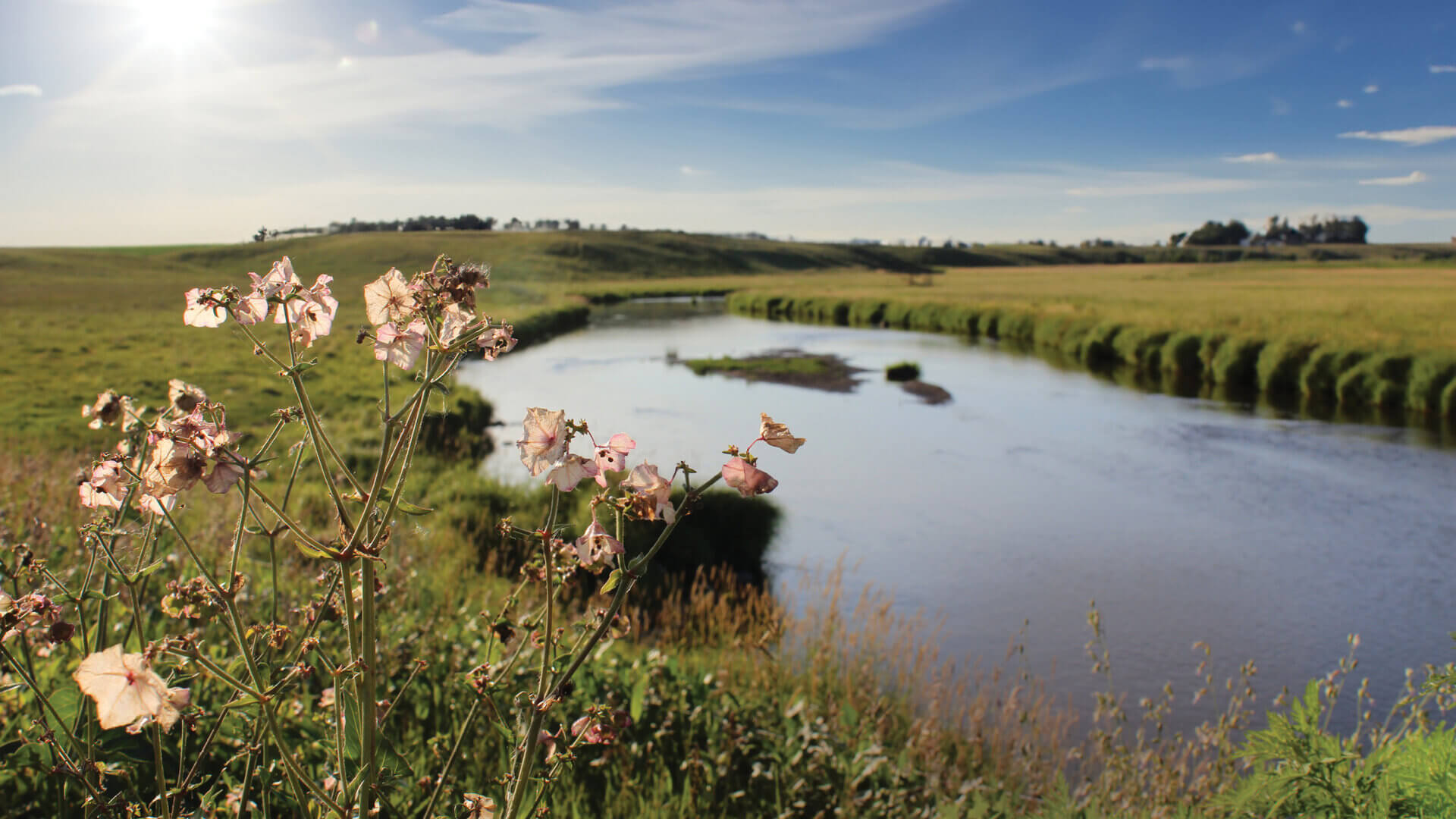
Minnesota’s waterways are undergoing a quiet transformation. In locations across the state, rivers, lakes, fish, and the people who enjoy them are benefiting from a novel approach to dam replacement. Instead of repairing or maintaining aging and vulnerable dams, which often fail to support proper fish passage, local agencies are opting to replace them with engineered rock arch rapids.
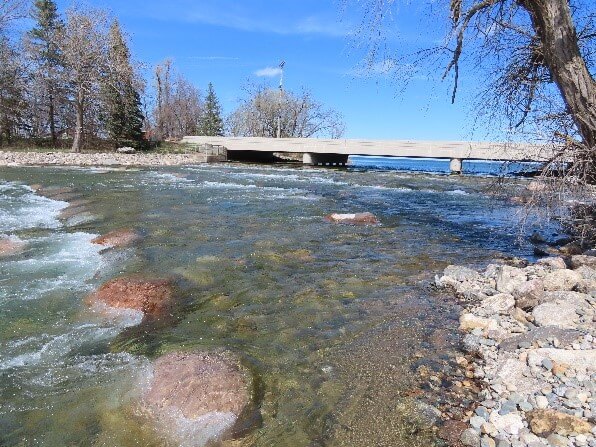
Engineered rock arch rapids help revitalize aquatic ecosystems, support recreational activities, and preserve water levels needed for human use—all while addressing the environmental and safety challenges posed by traditional dams. This cutting-edge design originated with Luther Aadland, a former Minnesota Department of Natural Resources River Scientist and Otter Tail County resident. His design employs various-sized rocks and boulders to create a series of u-shaped rock steps, forming an elongated water control system and fish passage structure. Large boulders slow and temporarily hold downstream currents, mimicking the water control functions of a concrete dam. Meanwhile, fish passage is enabled by the eddies, or “soft water,” created on the downstream side of these boulders. Intricate engineering and careful placement are required to both slow flows to desired levels and create paths for fish to navigate the installation.
Ecological Benefits
Rock arch rapids have many ecological benefits. They enhance the downstream transport of sediment and nutrients that would otherwise accumulate behind a dam, and foster spawning habitats by creating well-aerated, small rock and gravel beds within the installation. Beyond ecological gains, these rapids offer recreational opportunities for kayakers and canoeists, bringing fast-water experiences to typically low-gradient streams. This, in turn, supports local businesses that cater to outdoor enthusiasts.
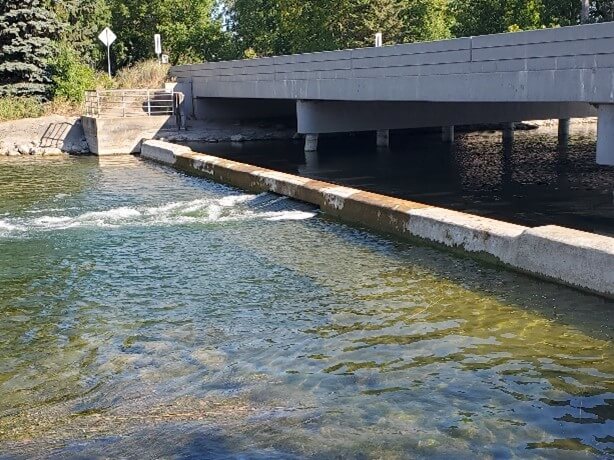
While removing dams entirely generally resolves fish passage issues, it often disrupts water levels, negatively affecting property, infrastructure, and recreational uses along waterways. A great benefit of rock arch rapids is that they allow fish to pass through or spawn within them while still maintaining water levels as if the concrete dam were still in place.
Cost Savings & Safety Benefits
Rock arch rapids are also cost-effective and safe relative to dams. Most concrete dams have a lifespan of 50-100 years and are costly to maintain, repair, or replace. Although rock arch rapids are not cheap initially, they require minimal, if any, upkeep costs or maintenance after installation.
The safety benefits of rock arch rapids are twofold. They often replace “low head” dams, which allow water to spill over their top and then create a churning, hydraulic wave that can trap swimmers and overturn boats. On average, these structures are responsible for the drowning deaths of 50 people every year in the United States. Rock arch rapids also eliminate the potential for catastrophic dam failure and breaching events. When a dam implodes, it releases a large and powerful water pulse, which can drastically affect downstream occupants and infrastructure. Rock arch rapids prevent these pulses and are designed to focus flows to the center of a waterway, which reduces the impact of large flows on riverbanks.
Despite their numerous benefits, rock arch rapids have faced resistance. Whether it’s nostalgia for a familiar view, misconceptions about water level changes, or general resistance to change, the public has yet to embrace the use of rock arch rapids fully. If the extensive benefits to fish, reductions in costs, and safety improvements aren’t enough to sway you, then a trip to one of these sites is definitely in order. Seeing the incredible melding of the forces of nature with the ingenuity of humankind that rock arch rapids represent and a “river running through it again” should help do the trick!
About the Author

Mark Kaelke is a Community Planner for West Central Initiative. His work focuses on climate and natural resource issues. He was instrumental in creating west central Minnesota’s Climate Action Plan. Mark’s background is in conservation and outdoor recreation. He lives outside of Underwood with his wife Denise and his three German Wirehair Pointers.