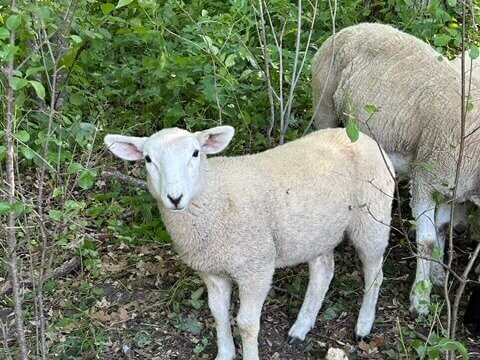
Our Community Planner, Mark Kaelke, recounts his experience removing buckthorn the eco-friendly way, not with herbicides, but with sheep.
It All Began with an Advertisement
The online ad started with something like “Looking for land to graze sheep for buckthorn control.”
It only took one email from my wife Denise and a site visit, and we were on our way to hosting a flock of four ewe and lamb pairs for a month in hopes of eradicating the invasive shrub from our property.
Alleviating Our Concerns
Denise and I grew up around livestock but didn’t have experience with sheep, so we were a little wary but willing to give it a try.
Our first concerns focused on whether our three highly prey-driven dogs might injure the sheep or worse, how much water we’d need to provide our loaner flock, and whether the sheep would actually eat the buckthorn.
Enter Brittney Johnson, who raises sheep for wool and meat north of Underwood. Brittany has a serious disdain for buckthorn and a can-do attitude when it comes to getting her sheep contained and settled on new properties. She allowed us to give the dogs a probationary trial with the sheep; then she assured us that the sheep would need minimal water, and last but not least, she confirmed that her sheep would denude the forest floor where the buckthorn was staging a takeover.
Bring On the Sheep!
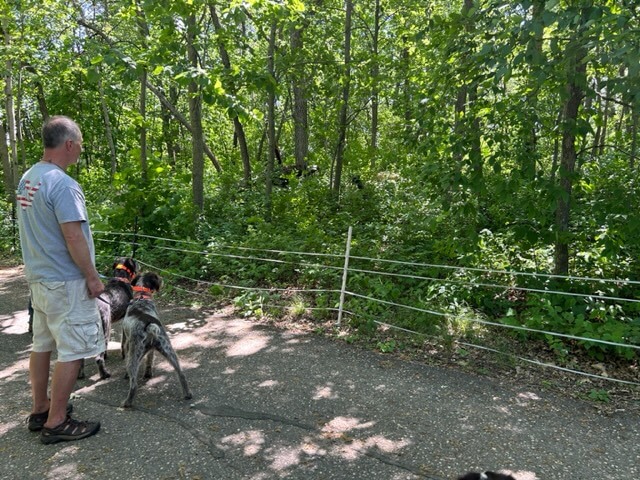
With the terms of engagement defined, we strung four strands of portable electric fence around a roughly one-acre area next to our driveway. The spot was rife with buckthorn, within reach of a garden hose, and close enough to the house where we could keep an eye on the sheep. A day or two later, Brittney returned with eight sheep in a trailer. Wasting no time, the lead ewe sprang from the trailer, her charges in tow, and within minutes, the loaner flock was happily chomping away in their temporary enclosure.
Meanwhile, Denise, some friends, and I worked on training the dogs, who, at that point, seemed pretty intent on getting lamb chops for their evening meal. However, we quickly learned that the shock collars were relatively mild compared to the electric fence. The yelps from wet noses contacting the fence assured us there’d be no lamb chops in their future.
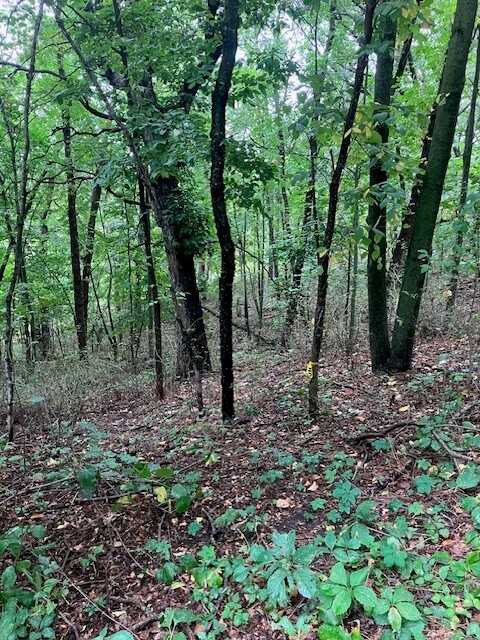
From there, we let the sheep do the work and were amazed at how quickly the once-dense understory opened up, and the enclosure became buckthorn-free to the height the sheep could reach.
After about two weeks, we re-strung the fence around an adjacent acre and watched the process repeat. Aside from removing the invasive buckthorn, the grazing should set the stage for native plants, which support wildlife, to regenerate and make the area more resistant to invasives in the future. From the very little we have been able to gather over the internet, we will most likely need to re-graze the two areas next year to knock the buckthorn down completely, but we’ve made a start, didn’t have to employ herbicides and learned a bit about sheep in the process.
Resources & Similar Stories
About the Author

Mark Kaelke is a Community Planner for West Central Initiative. His work focuses on climate and natural resource issues. He was instrumental in creating west central Minnesota’s Climate Action Plan. Mark’s background is in conservation and outdoor recreation. He lives outside of Underwood with his wife Denise and his three German Wirehair Pointers.