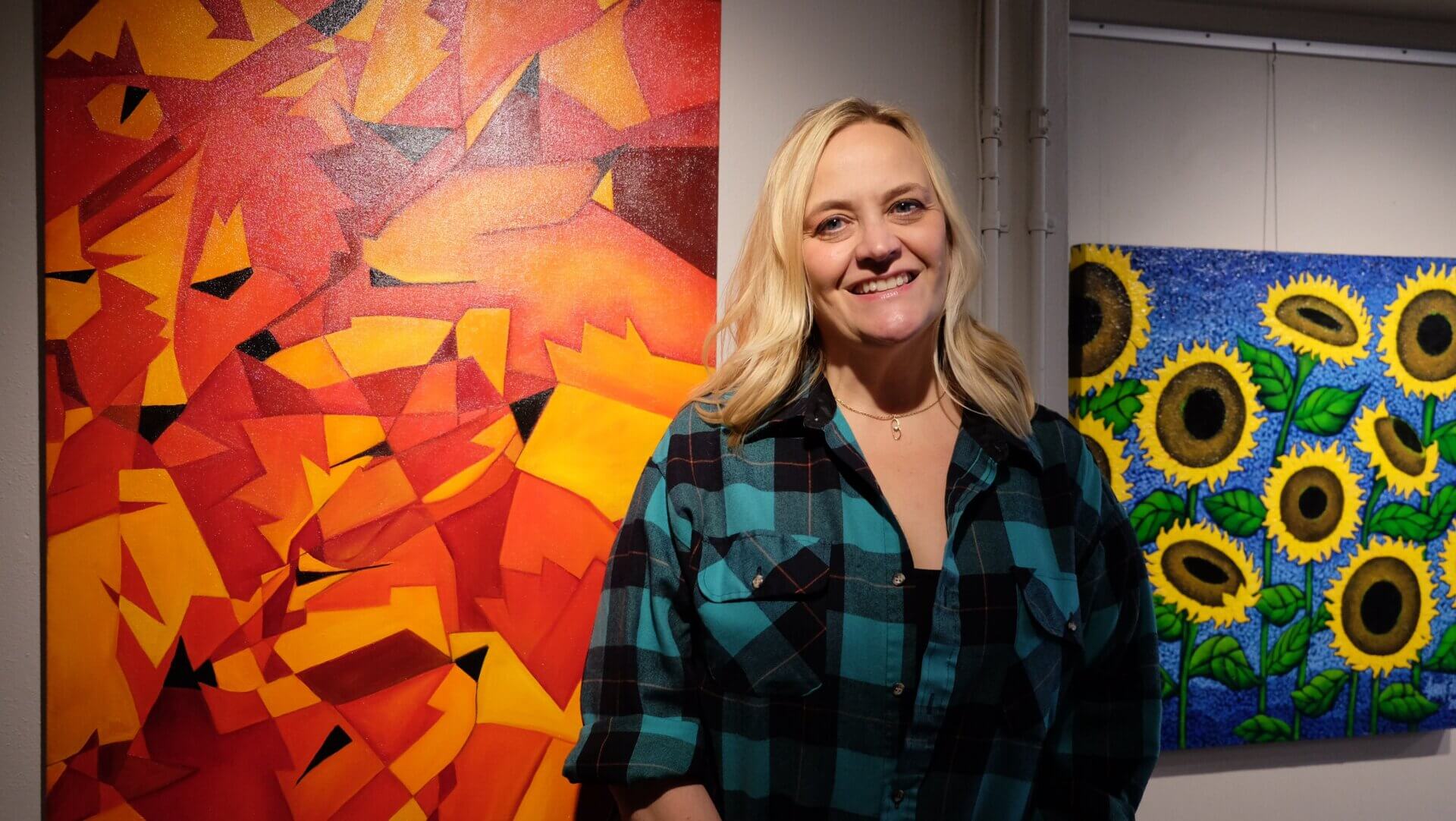
Life begets art. Across mediums and millennia, the life of an honest artist has never been that of dreams, but out of a harder life comes beauty honed by hungry passion. How could it be that out of such circumstance, beauty and color, life prevails? It’s not a thing of fate. It’s a choice made by dedicated, hard- working people trying to record and share their vision.
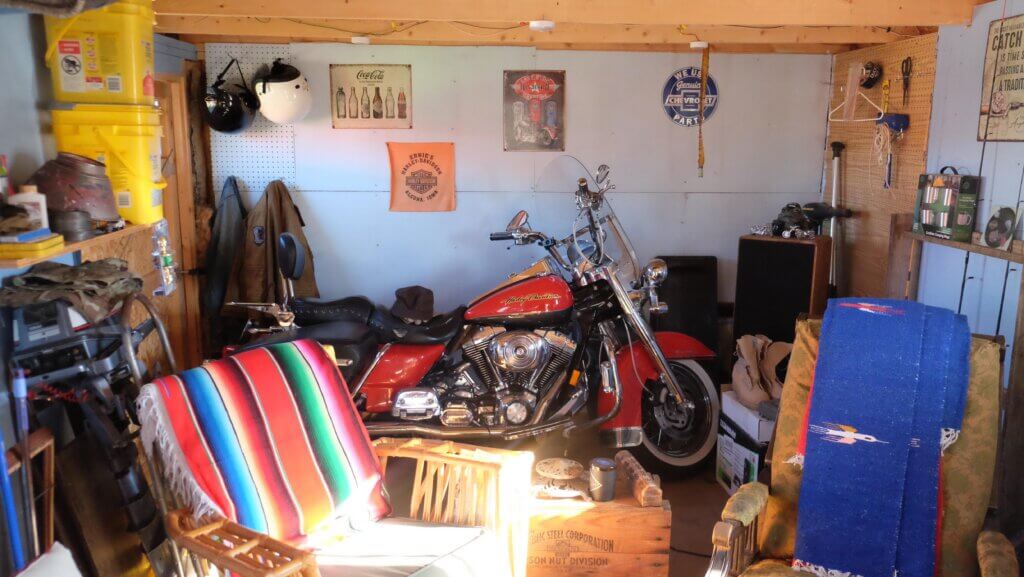
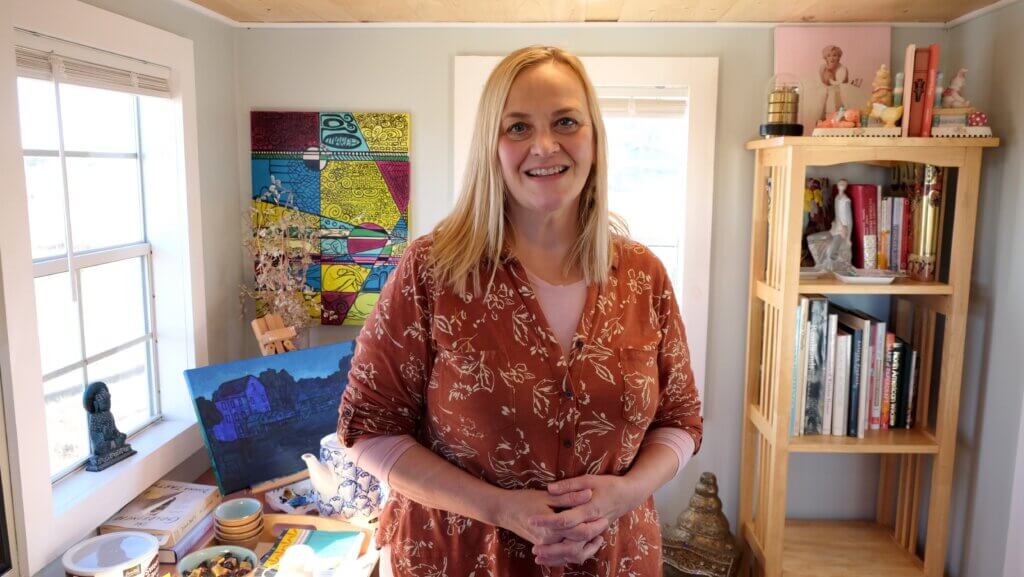
Jenny Field is no stranger to trials of the heart, soul, and mind. Born and raised working hard, Field grew up on a dairy farm near Erhard, Minnesota, with five siblings – four boys and two girls in the family. “There wasn’t a thing you could put on our plates that we wouldn’t eat,” said Field. “Likewise, there was hardly a moment I felt bored. We always had something to do outside with the animals or for school. The woods and wild places became my escape from home life, before I could move out,” said Field.
Field moved out at the age of 15. “Nobody knew where I lived,” she said. “I was on the honor roll and in theater. I was a lead in a play. I was president of the concert choir, and I worked at Dairy Queen.”
Today, at her home and studio near Phelps Mill in Underwood, Minnesota, Field continues to live a lifestyle in deep connection to the earth. Solar-powered buildings, rainwater captured in a massive holding tank, a miniature greenhouse and plenty of grow lights for year-round gardening, compost bins, chicken manure fertilizer, pellet stoves, and a garden of heirloom Minnesota native wildflowers and legumes. Field does just about everything you can at home to live in harmony with the cycles of the natural world.
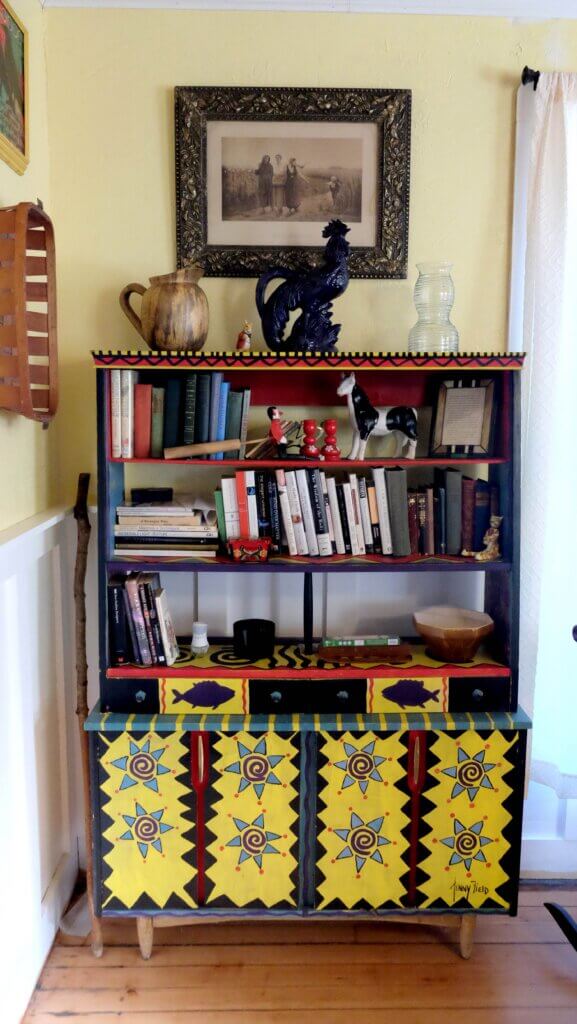
This harmony extends into her artwork. Using her gift of sight, as not all who have eyes can see, she has played with different mediums, turning furniture into frescos and upcycling old painting frames by stretching new canvas on top. Her husband, John, is exceptionally talented at building and prepping many of the frames Field has used and that are now on display at Kaddatz Gallery. Field’s capacity to re-enchant the mundane, dull, and ordinary into something worthy of curiosity is humbling.
It is a skill worth honing, especially during lockdown, when many were paralyzed with emotion and trauma suspending time in place. “I still had the love for my plants,” said Field. “I can remember exactly the time in the spring when the snow was gone, and the pollinators had exited from their winter homes, out from the little nooks and crannies in the plants I left. It was the Hollyhocks, and the Hostas, and the Bee Balm, and everything. They were brown and all intertwined.”
Field’s artistic process parallels that which scientists, policy makers, and the average denizen are trying to apply towards re-imagining human life in a changing climate. “I was starting to clean it up, and then I just kept staring at it, thinking ‘This is so beautiful. It’s all dead but it’s so beautiful still, and then I decided to draw lines on that canvas,” pointing to one of her most recent pieces titled “Purple Martins and Three Cats in the Zen Garden.” We need to look hard at a dying world and still see beauty within, then re-enchant our lives with lines of new life.
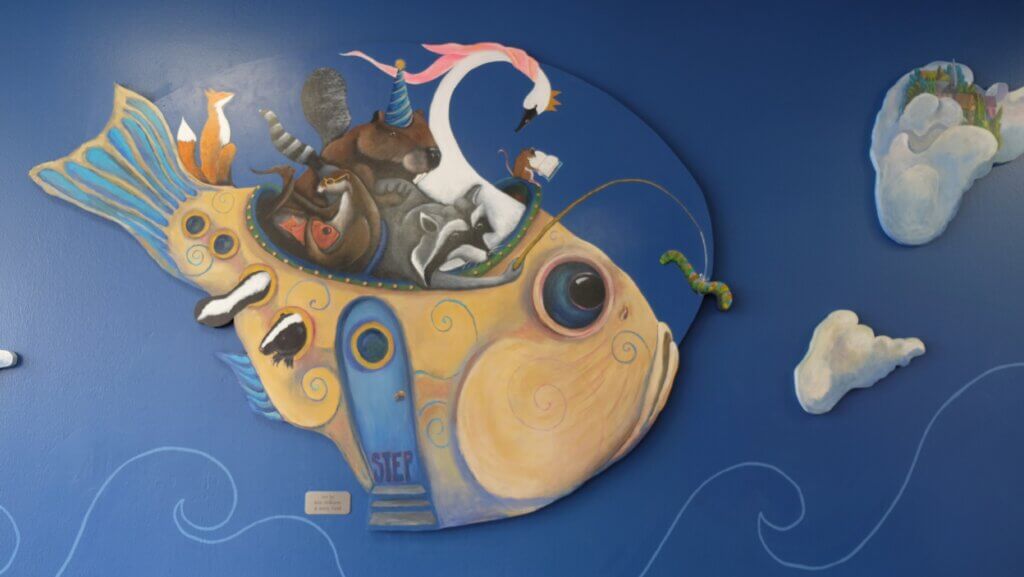
Field’s upcoming show, hosted by the Otter Tail County Historical Society, is titled Roots and Renewal. “It has all to do with this area, and how it’s in my bones,” Field said. When I visited her and her husband at their home, Field told me that just a mile away was a cemetery interning six generations of her family. “My art is in my bones now too with arthritis,” she said. “To paint, I would sit on hard floors in the lotus position for fifteen hours at a time.”
We look forward to what illumination may come from Field’s next mediation on two things core to her life in Otter Tail county, and our era of collectively re-imagining life.
About the Author

Benjamin Velani is the Lead for America Climate Fellow and serving AmeriCorps member at West Central Initiative. He recently graduated Summa Cum Laude from Cornell University, majoring in Religious Studies and Government and writing an undergraduate thesis on the human and ecological effects of light pollution and dark night skies. He was formerly the Dining Editor at The Cornell Daily Sun, and he’s now taking the lead on West Central Initiative’s Climate Action Newsletter.