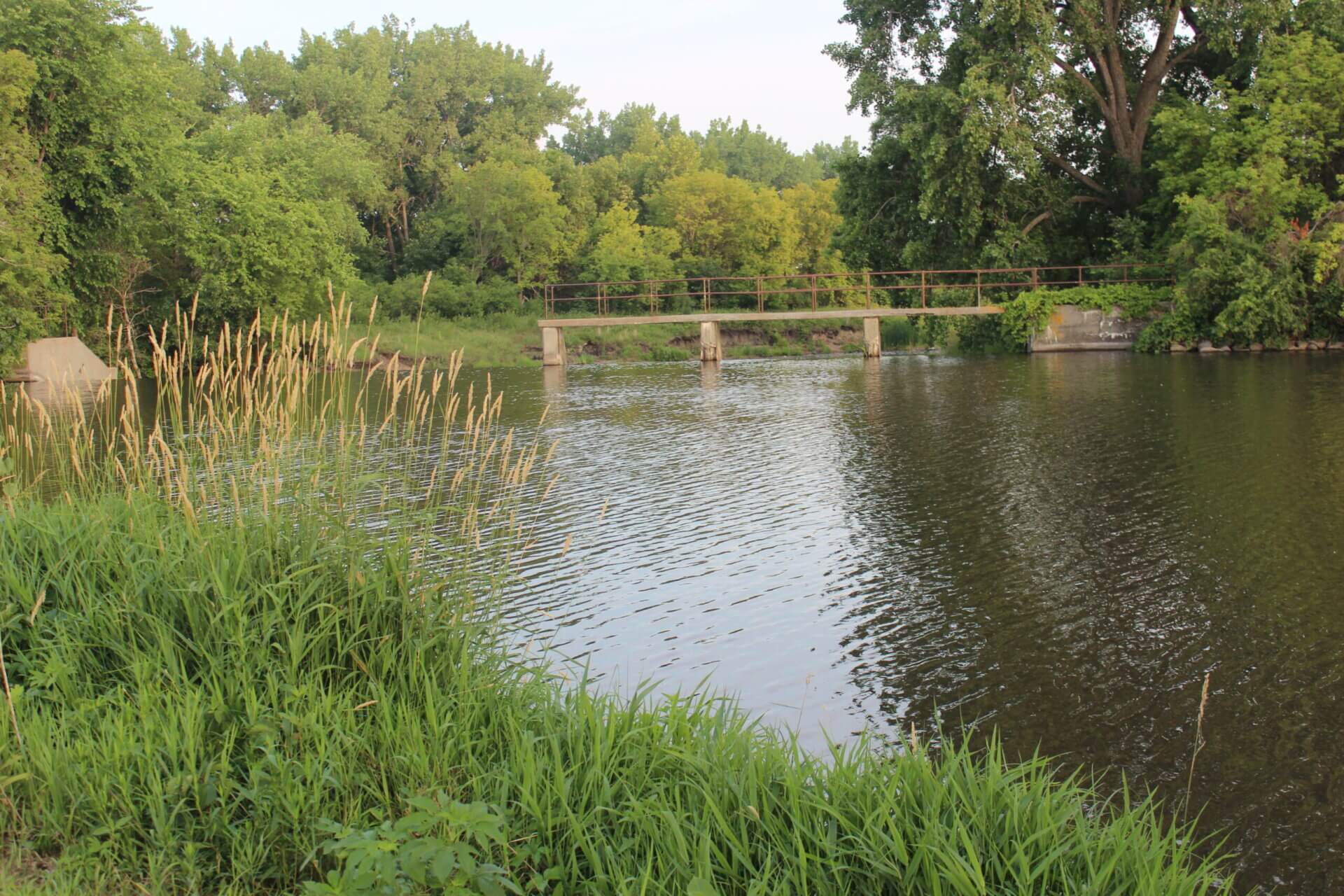
If you grew up around lakes and rivers in Minnesota, you might have seen a walleye, perch, and maybe even a feisty northern pike. But have you ever seen a lake sturgeon? These prehistoric giants—known as “Name” (nu-may) to the Anishinaabe—can live for over 150 years and grow up to 300 pounds. Once abundant in the Red River Basin, lake sturgeon were wiped out due to habitat loss, overharvesting, and the construction of dams.
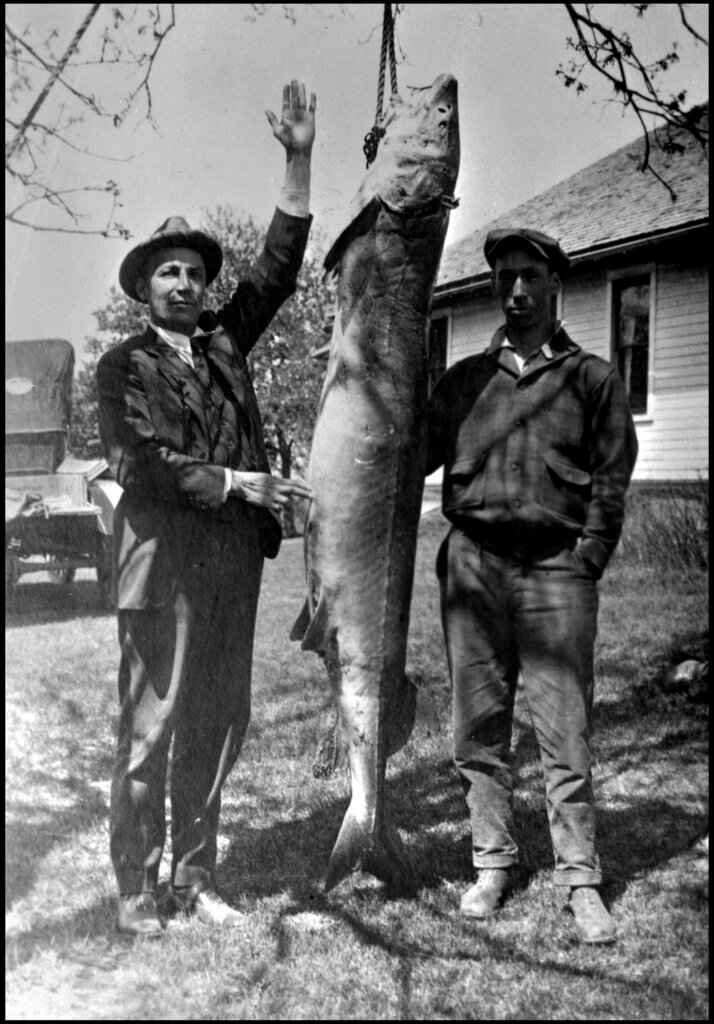
But here’s the good news: they’re making a comeback.
One major player in their return? Rock Arch Rapids.
Dams, Declines, and the Need for Change
Since the late 1800s, Minnesota’s rivers have been reshaped by dams—built to create water reservoirs, transport logs, or power various milling operations. While they served their purpose at the time, they also had serious consequences for aquatic life. Dams block migration routes, disrupt spawning grounds, and alter water flow.
As retired DNR River Scientist Luther Aadland explains, these barriers have taken a major toll on native fish. Although fish in Minnesota are often considered “lake fish,” 117 of the 155 fish species documented in the state rely on flowing water for spawning. In a study of 32 dammed watersheds in Minnesota, he found that 36% of native fish species had disappeared entirely. But here’s the hopeful part—after removing dams or replacing them with Rock Arch Rapids, 68% of those species returned.
“Building a barrier on a watershed is about the worst thing you can do to a fish population or other aquatic life,” says Aadland. “Removing barriers has more broadly restored fish populations than anything else.”
What Makes Rock Arch Rapids Different?
Unlike traditional dams, which create steep drop-offs and completely cut off fish movement, Rock Arch Rapids are designed to allow fish to pass freely. Instead of a wall, they create a natural-looking, gradual slope of boulders and flowing water—mimicking the natural rapids that fish evolved with.
And they’re not just good for fish. Rock Arch Rapids also improve water quality by maintaining natural flow patterns, enhancing habitat for aquatic insects, and helping regulate water temperatures, which is crucial as climate change impacts intensify.
We’re already seeing shifts in weather patterns—more intense spring rains, lower summer water levels, and warmer temperatures. For fish like lake sturgeon, walleye, and catfish, these changes could disrupt migration, spawning, and survival rates. While Rock Arch Rapids aren’t a cure-all, they do help maintain crucial migration routes and create more stable conditions for aquatic life.
A Future Where Sturgeon Are “Fishable” Again?
So far, 41 dams in the Red River Basin have been replaced with Rock Arch Rapids—and the impact is real. One of the most exciting projects is the Rock Arch Rapids connecting Rush Lake and Otter Tail Lake. This connection has opened up critical spawning grounds for lake sturgeon, giving these ancient fish a fighting chance at long-term recovery.
And while sturgeons are important, they’re not the only beneficiaries—species like walleye, sauger, channel catfish, and other river-spawning species are also thriving thanks to restored river connections.
Right now, lake sturgeon populations are still rebuilding. But thanks to long-term stocking programs led by Tribes and state agencies, plus habitat restoration through Rock Arch Rapids, there’s hope that one day, they’ll not just be surviving—but thriving. Maybe even reaching a point where anglers can once again fish for them.
And don’t worry, swimmers—sturgeon may be huge, but they don’t have teeth! These gentle giants feed on bottom-dwelling creatures like snails, mussels, and crayfish.
Want to learn more? Check out Kings in the North: Lake Sturgeon Recovery in the Red River by the MN DNR. And if you’re curious about what else is being done to protect our region’s water resources, take a look at our Minnesota Region 4 Climate Action Plan.
The rivers of the Red River Basin are changing—and for the fish that call them home, that change is long overdue.
Interested in learning more about Rock Arch Rapids? Read A River Runs Through It (Again) on our blog.
About the Author

Mark Kaelke is a Community Planner for West Central Initiative. His work focuses on climate and natural resource issues. He was instrumental in creating west central Minnesota’s Climate Action Plan. Mark’s background is in conservation and outdoor recreation. He lives outside of Underwood with his wife Denise and his three German Wirehair Pointers.