When I was a kid in 2012, I remember being mesmerized by this Husqvarna ad depicting a gruff and handsome man “taming the wild” of his unruly, natural looking yard. His casual yet clean style, a tucked denim shirt, sleeves rolled, white undershirt, dark workpants, and boots, were candy to rural and suburban eyes. Shots from the front yard contrast the purity and cleanliness of an entirely white house to the prairie-like lawn with a fallen tree strewn across it. Slow motion shots captured the satisfaction of string-trimming up close.
Primed with depictions of yardwork like this in my youth, it must be no coincidence that I used to love the look of a manicured lawn. Last year, however, when I interned at a not-for-profit urban farm and taught free community lessons on ways to live more sustainably, I learned to love a new kind of lawn.
Tidy lawns were and still are the norm in most American neighborhoods, but that’s slowly changing. More and more landowners are choosing to do something creative and beautiful with their Kentucky bluegrass. Not only are these lawn alternatives going to save you time (and a lot of it knowing the grind of mowing mile-long driveways) and money, but they’ll also reduce the number of cancer-causing agents to which you and your family are exposed.
What’s important to note is that these are not all-or-nothing approaches. Do what you can because every little bit helps.
3 Altruistic and Attractive Lawn Alternatives
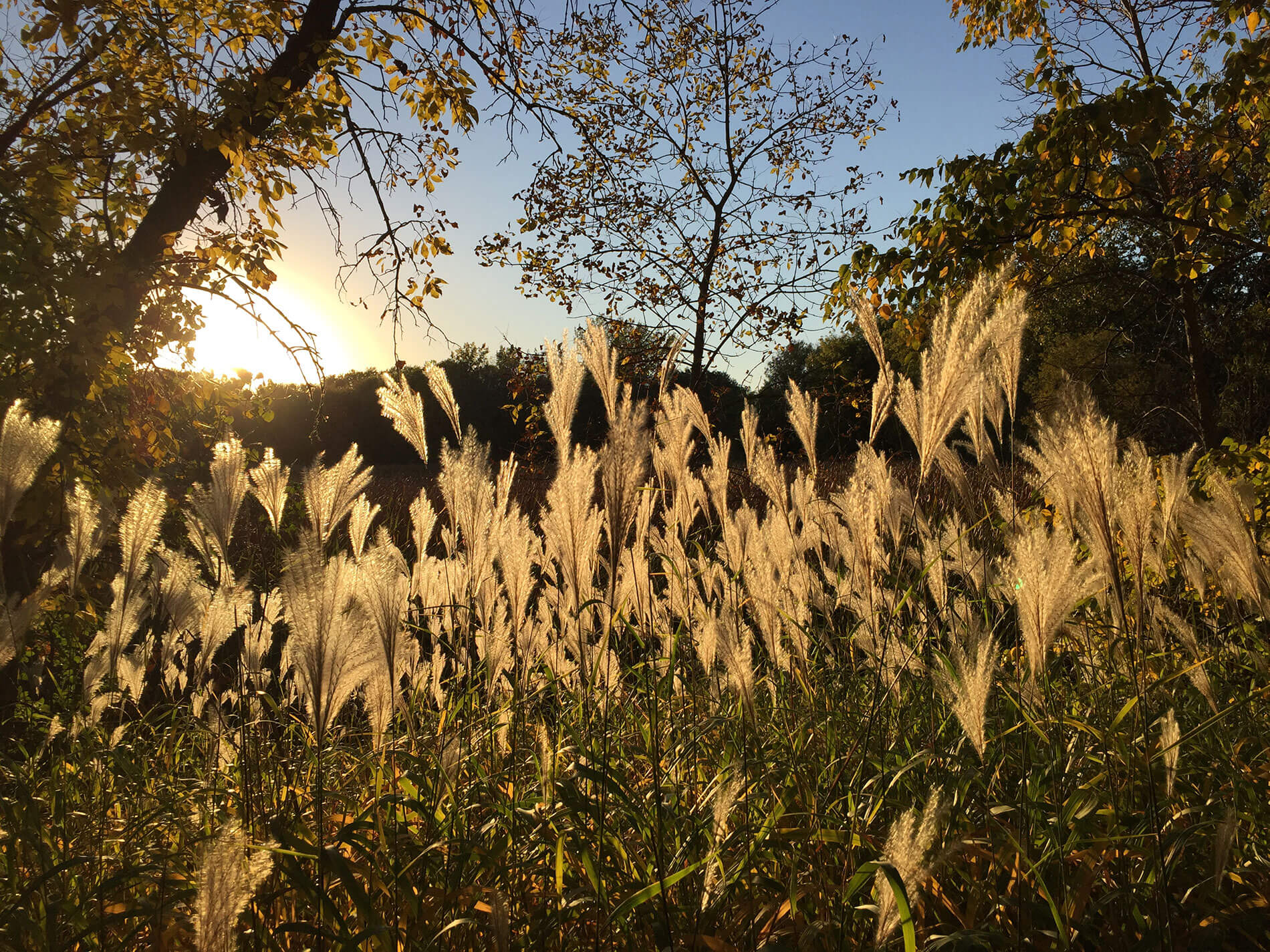
1. Seed your lawn with species that need to be mowed less frequently, like white Dutch clover, Feather reed grass, or blue fescue.
You’ll be saving time and money from having to run your mower less, and you’ll also be reducing the amount of fossil fuels that get burnt and end up polluting our air. If you pay for lawncare, then make sure to ask your service provider if they spray harmful, cancer-causing pesticides or herbicides on your lawn to “tame” insects and weeds. Learn more in this Lawn Love article.
Weed killers are some of the most toxic chemicals homeowners, their children, and pets are exposed to, with a recent analysis by the Department of Environmental and Occupation Health Sciences at the University of Washington showing that the popular herbicide glyphosate, “… increases the risk of a cancer called non-Hodgkin lymphoma by 41 percent ….” Stop using these chemical cheat codes on your lawn to reduce the chance your children get cancer.
2. Focus on the edges, planting perennial borders of natives around gardens, lawns, and fences if you want to keep some regular lawn.
As I mentioned earlier, every bit helps, so even if you’re a household that uses your lawn a lot for games, hosting events, or whatever your fancy, a living border is an altruistic and attractive alternative to black rubber lawn edging. Living borders can be built any number of ways, but one great strategy that I’ve done before is to start by digging logs and sticks into your edge. As this settles over time, it will become a living border rife with all the micro-organism necessary for whatever grasses and wildflowers you plant to thrive.
3. Focus on native plants and select ornamentals to help local pollinators.
The DNR has an online native plant encyclopedia with a wealth of information about the species that you could plant. If you have enough space, you can get support from your county Soil and Water Conservation Districts to restore lawn to prairie for pollinators, like what we did at West Central Initiative’s Fergus Falls office. Prairies are natural carbon sinks, meaning the grasses that make them up hold a lot of carbon dioxide (CO2), absorbed from the air around them, in their bodies. Less CO2 in the air means less greenhouse gasses in the world’s atmosphere – always a good thing.
Digging Deeper
So, you’ve been hearing about pollinator gardens and lawn transformations for some time now, maybe from your neighbors or online, and now you think you’re ready to act. How do you know how much lawn is right for your household transform? To start brainstorming, here are some questions you should ask yourself about your lawn use:
- How often am I and my family making use of the lawn?
- What do I mostly use my lawn for, and can I still accomplish that in a smaller space?
- Who am I mowing my lawn for and why? Myself? My neighbors? Municipal codes? Is there a practicality to it?
- Who benefits from my lawn the most? Is it your family, or the insects, reptiles, birds, and all creeping things that call your lawn home?
- Are the health, financial, time, and environmental costs worth the aesthetic of a mowed, Kentucky bluegrass lawn?
- To break the above down further, how much does it cost you every year to maintain your lawn? How much time do you spend mowing, or paying someone else to mow?
In an email exchange, Aaron Larson, Project Manager at West Otter Tail Soil and Water Conservation District (SWCD), offered these resources, “At the SWCD we believe there is room for conservation practices on every property, large or small. The SWCD can assist with design and layout of rain gardens, shoreline restorations, and can provide guidance on how to establish a small pollinator plot on your property. The SWCD is a vendor for native grass and wildflower seed and can assist with developing and ordering a pollinator friendly mix for your property.”
With wonderful people like this on our community, it’s easy to start having a big impact on a global problem, right from the land beneath your feet. What’s stopping you?
About the Author

Benjamin Velani is the Lead for America Climate Fellow and serving AmeriCorps member at West Central Initiative. He recently graduated Summa Cum Laude from Cornell University, majoring in Religious Studies and Government and writing an undergraduate thesis on the human and ecological effects of light pollution and dark night skies. He was formerly the Dining Editor at The Cornell Daily Sun, and he’s now taking the lead on West Central Initiative’s Climate Action Newsletter.
We want to hear from you!
Please take our Climate Action Survey and subscribe to our newsletters.