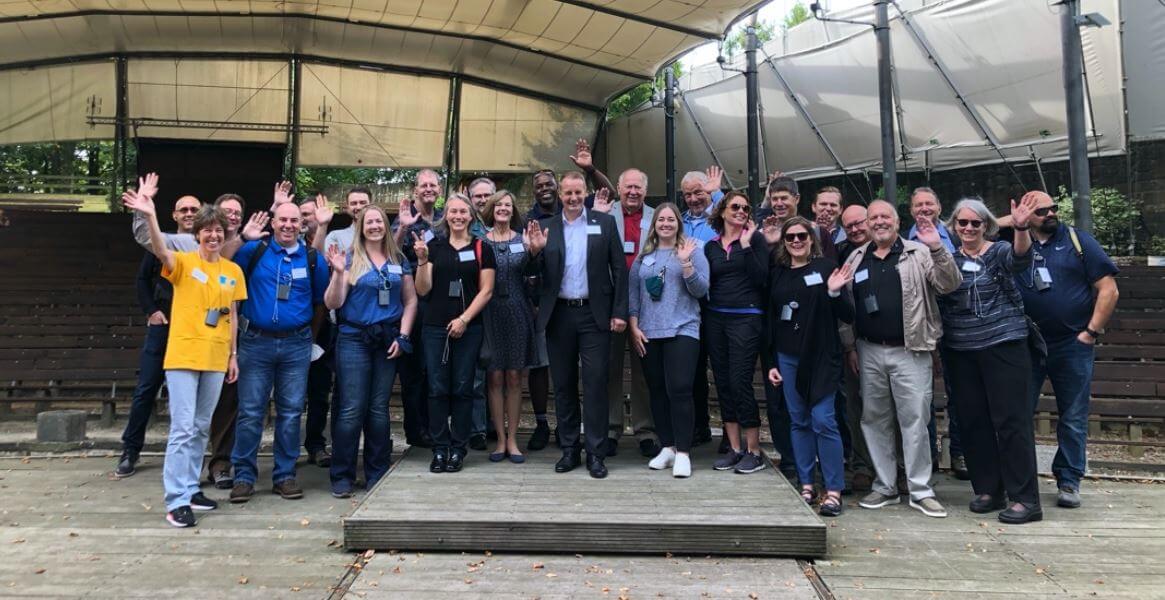
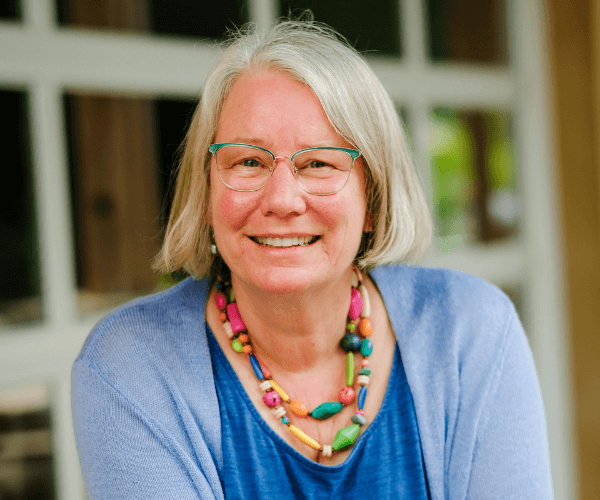
West Central Initiative President Anna Wasescha, along with delegates from across Minnesota, traveled recently to Germany as part of an education exchange to learn about climate-smart cities. This is the fifth time that the University of Minnesota’s Institute on the Environment has organized a citizen exchange between Minnesota and German communities that focuses on energy issues and ways to deal with climate change. We asked to share her reflections from her trip.
Who was on this trip and what were delegates hoping to learn?
About 30 people traveled from cities like Morris, Duluth, White Bear Lake, and Rochester. Representatives from state offices, the state legislature, and two regional development organizations attended. This was the fifth time a delegation from Minnesota traveled to Germany , and some delegates have participated all five times.
Communities in Minnesota are thinking about the same things that the German communities are thinking about in regard to the future. Germany has some amazing climate-smart cities, modeling extraordinary ways to produce energy locally and to provide sustainable and environmentally-friendly modes of transportation. Civic leaders in Minnesota are asking how they can be more energy-efficient, to reduce their reliance on fossil fuels, and what they can we do now to better prepare their communities for a more sustainable future.
It was really good to be in another country and see how much can be gained when communities so far apart geographically come together to share ideas and offer encouragement.
What is a climate-smart city?
To me, a climate-smart city is one where a very strong coalition of leaders in the community comes together and makes agreements about moving toward climate neutrality. They want to move toward carbon neutrality, move away from a carbon-based economy. That takes everybody to be involved. West Central Initiative welcomes the opportunity to have conversations about this process because we see the value of region-wide collaboration and the impact we can have if we work together to address climate change.
How do our communities start such a process?
Start by asking questions and having conversations. For example, how do people get around and what transportation options are available? How can we throw a spotlight on the possibilities for producing clean and renewable energy? In Munster, Germany, they are transitioning all their buses to hydrogen or electric power. So, that means they need different configurations in their maintenance garages because maintaining that type of a fleet is very different than maintaining vehicles powered by gasoline and a combustion engine. This process requires a lot of adjustments behind-the-scenes.
We also saw many examples of local initiatives, where community leaders stepped up, rather than waiting for the state or federal government.
You visited Saerbeck, in northwest Germany, which is the sister city to Morris in Stevens County. What did you learn there?
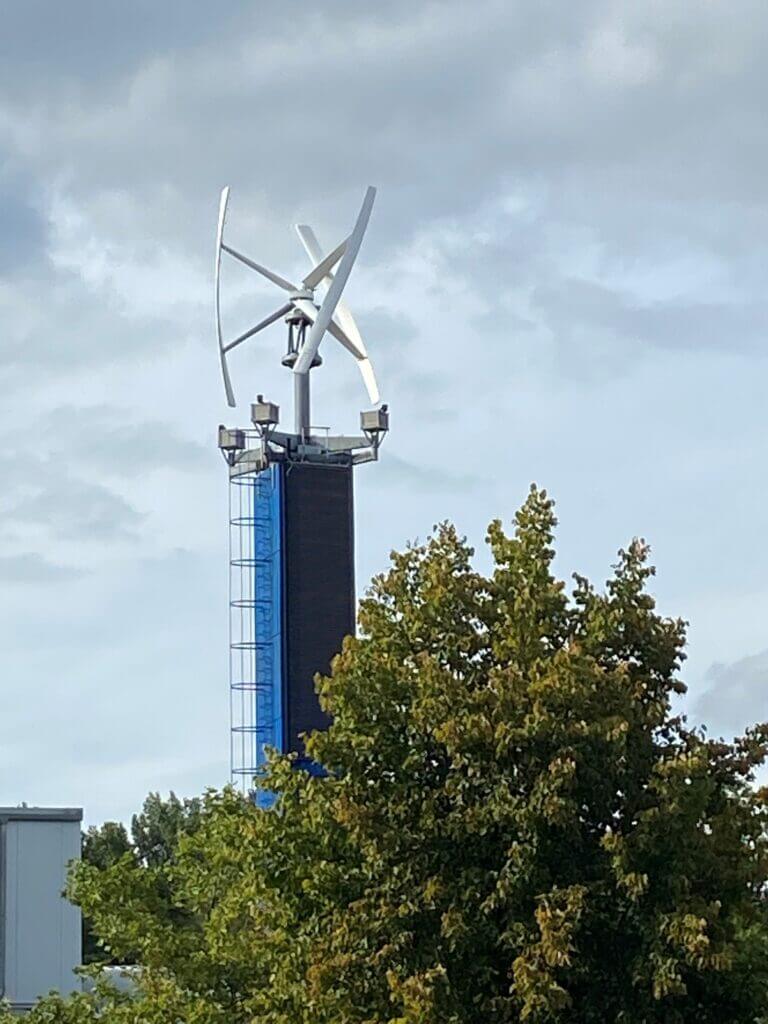
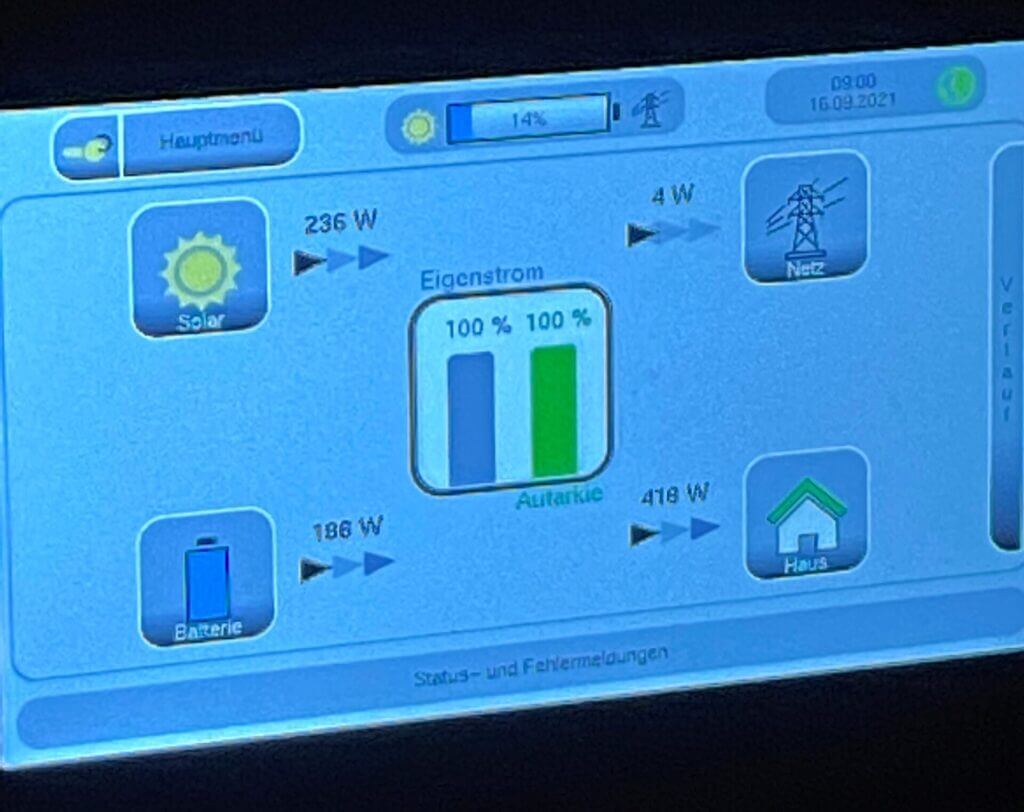
Saerbeck is doing amazing work. The city and surrounding area have over 300 wind turbines, so they’re everywhere. It even has vertical turbines that twist and turn. Because the wind doesn’t continuously blow and the sun doesn’t continuously shine, they’re working to incorporate more battery storage. Battery storage helps to keep the lights on when those intermittent resources aren’t producing adequate energy.
And even though I was in Germany, I learned more about Morris, too. Morris has been installing solar panels on their municipal buildings. One of those is the municipal liquor store. Their motto is “our beer is cooled by the sun.” I think it would be fantastic if we could get more municipal buildings across our region to generate some of the power they use every day from solar panels on their roofs.
Oh, and this is really fascinating: The planners in Saerbeck, the chief planner and his crew, created a plan that had 150 steps to it. Ordinarily, that would just boggle the mind. Some might say “no, we don’t have the bandwidth, tell us one or two things we should focus on.” But they put all 150 steps on a map that looks like a subway map of a major city, and you see the relationships. It’s a road map to the future and look, it has to start here – it has to start somewhere.
That kind of map to the future would be challenging, right?
Our hosts talked about challenges they face in sustainability. They said getting to climate neutrality begins between your ears. I thought that was brilliant. You have to develop a way of seeing the world that always considers how much carbon dioxide you are adding to the earth’s atmosphere. And, in the end, each of us has to change our behavior so that we reduce the amount of carbon dioxide we are producing.
What were some of your other impressions?
I didn’t see any single-use plastic. During the nine or ten days, I don’t think I drank anything out of a plastic bottle. Everything is in glass, heavy glass, so bottle openers are back in fashion. And shopping bags. Everybody carries shopping bags, so you don’t expect to be given one. We were in the biking capital of Germany, Munster, and everywhere you look you can see the astounding infrastructure they’ve built to support biking. They have dedicated lanes and parking garages for bikes. It’s just the way everybody gets around. People bring their bikes on the trains and buses.
Finally, did you have any interesting foods?
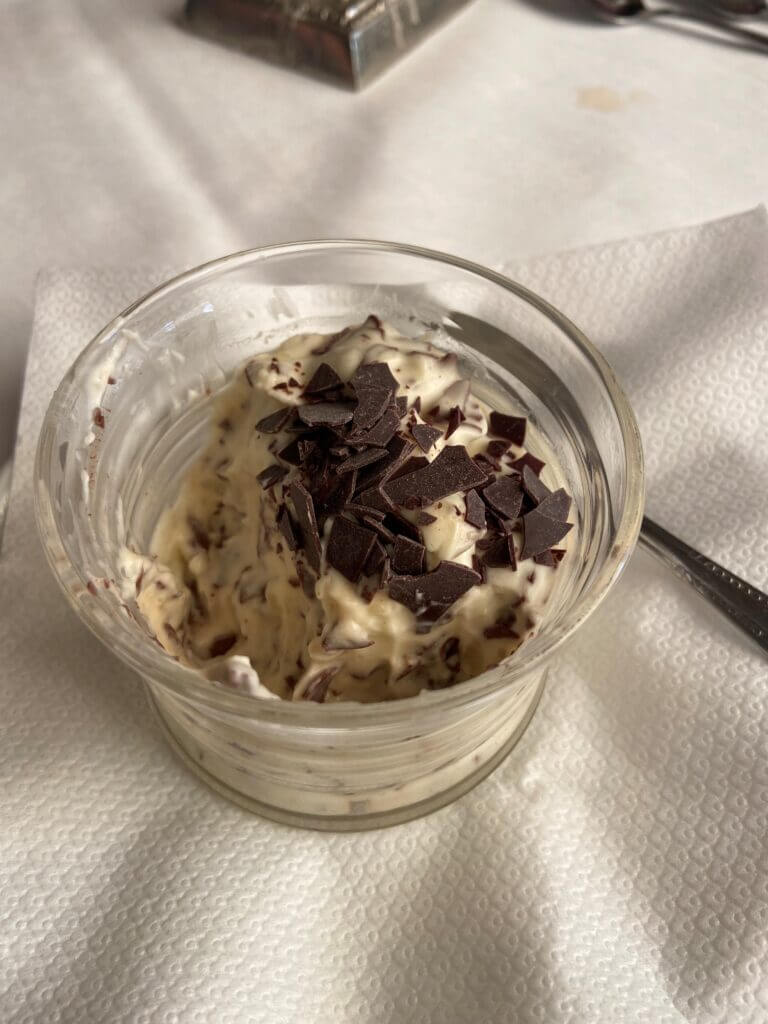
I had lots of delicious sausages. German cuisine really emphasizes meat and potatoes and they make really delicious sauces. The northern European breakfast is incomparably good – heavy breads, meats, cheeses, yogurt and fruit. I wish I could start my day that way every day. My favorite thing was a dessert called His Master’s Cream (also known as Herrencreme). This is a regional favorite. It’s vanilla pudding with whipped cream churned into it along with rum and shavings of dark chocolate. It really is quite wonderful.
(NOTE: We are including a week’s worth of the Daily Dispatches below, authored by Madeline K. Lydon, from the Humphrey School of Public Affairs.)